How to Identify Hidden Mold Before It Spreads Further
A room can look clean, smell mostly normal, and still hold moisture damage behind a wall or beneath a floor. Knowing how to identify hidden mold can help you act before a small leak turns into damaged materials, lingering odors, and a larger restoration project.
Hidden mold is not always dramatic. Sometimes it begins after a toilet supply line drips inside a vanity, an HVAC drain pan overflows, or rain enters through a roof or window opening. In Texas, high humidity and sudden storms can make those moisture problems harder to ignore. The goal is not to tear apart your property looking for mold. It is to recognize the warning signs, locate the moisture source, and bring in qualified help when the situation calls for it.
Why Mold Stays Hidden
Mold needs moisture, a food source, and time. Drywall paper, wood framing, carpet backing, insulation, dust, and stored belongings can all support growth when they stay damp. A surface may dry quickly while the cavity behind it remains wet for days.
That is why a repaired plumbing leak does not always mean the problem is over. If wet materials were not dried thoroughly, mold can grow out of sight behind baseboards, under cabinets, inside wall cavities, or beneath flooring. Painting over a stain can also hide evidence without correcting what caused it.
The most useful question is not, “Can I see mold?” It is, “Where has water been getting in or staying trapped?”
How to Identify Hidden Mold: Start With Moisture Clues
Water history is often the strongest clue. Think back over the last several months, not just the past week. A water event that seemed minor may still matter if it affected drywall, flooring, insulation, or cabinetry.
Pay close attention after a roof leak, burst pipe, appliance overflow, slab leak, sewage backup, window leak, or flood. Also investigate rooms with repeated condensation, such as bathrooms without effective exhaust ventilation, laundry rooms, kitchens, and areas around HVAC equipment.
Look for subtle physical changes. Walls may feel soft or show bubbling paint. Baseboards can swell, separate, or discolor. Wood flooring may cup or buckle, while laminate flooring may lift at the seams. Carpet can feel damp along an edge or develop a stain that returns after cleaning. Under sinks, inspect the cabinet bottom and the wall behind plumbing connections for warping, staining, or a musty odor.
A moisture meter can be useful, but readings require context. Dense materials, metal fasteners, and differing building materials can affect results. A professional inspection combines moisture readings with visual evidence, building history, and targeted investigation rather than relying on one number.
Follow the Odor, Even When You Cannot See Growth
A persistent musty, earthy, or damp smell deserves attention, especially if it becomes stronger when the air conditioner runs, a closet is opened, or weather turns humid. Air fresheners, cleaning products, and open windows may temporarily cover an odor, but they do not remove the source.
Odor alone does not prove mold. A dirty drain, damp carpet pad, old upholstery, animal activity, or HVAC issue can create similar smells. Still, a recurring odor in one location is a reason to inspect more closely. Note when and where it is most noticeable. That information can help narrow down whether the issue is related to plumbing, roof intrusion, ventilation, or a concealed damp area.
Check the Places Mold Commonly Hides
You do not need to remove drywall or pull up floors to perform a basic check. Start with accessible areas and avoid disturbing suspicious materials unnecessarily. Wear gloves, and do not run fans that could spread dust from a visibly contaminated area.
Focus your inspection on these common hiding places:
- Behind furniture placed against exterior walls, especially in rooms with past leaks or condensation
- Under kitchen and bathroom sinks, around toilets, behind refrigerators, and near washing machines
- Inside cabinets, closets, and storage rooms where airflow is limited
- Around window frames, ceiling penetrations, skylights, and attic access points
- Beneath loose carpet edges, damaged flooring, or warped baseboards
- Near air handlers, condensate drain lines, supply vents, and return vents
In an attic, look for dark staining on roof decking, wet insulation, rusted nail tips, or moisture around vent pipes. In a crawl space, look for standing water, wet soil, damaged vapor barriers, or wood that appears discolored. These spaces can be difficult and unsafe to access, so a professional assessment is often the better choice when conditions are unclear.
Watch for Changes in the Building, Not Just Dark Spots
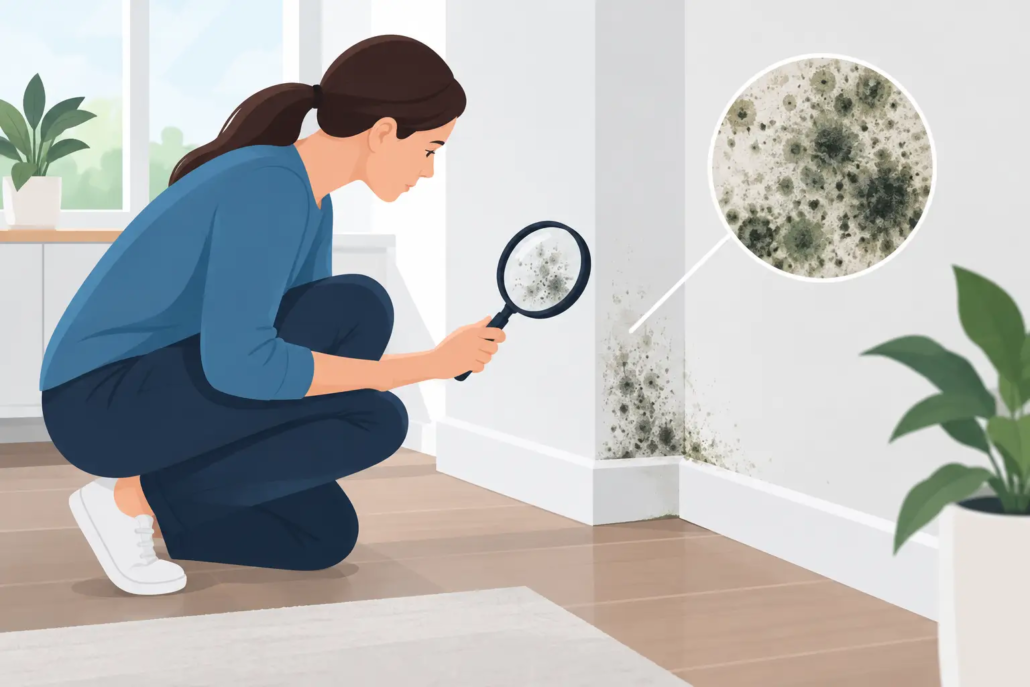
Mold can be many colors, including white, gray, green, brown, or black. Color cannot identify the type of mold or tell you how serious the issue is. A dark spot might be mold, dirt, old water staining, soot, or another material entirely.
Instead, look for patterns that point to moisture damage. Repeated stains on ceilings, cracking or peeling paint, swollen drywall, loose tile, and recurring mildew around caulk all indicate that water management needs attention. If a stain grows, returns after painting, or feels soft when gently pressed, do not ignore it.
Pay attention to personal comfort as well, without trying to diagnose the cause. If occupants notice irritation, headaches, or worsening allergy-like symptoms mainly in one room, mention that pattern during an inspection. Those symptoms can have many causes, so the practical next step is to check the environment for moisture, ventilation, and contamination concerns.
When an HVAC System May Be Involved
Air conditioning systems remove moisture from indoor air, which makes drainage and maintenance critical. A clogged condensate line, overflowing pan, poorly insulated duct, or dirty air handler can create damp conditions around equipment. If the musty smell appears shortly after the system starts, or only certain rooms smell affected, the HVAC system should be evaluated.
Do not assume the ducts are the source simply because you smell an odor at a vent. The odor may be traveling through the system from a nearby wall cavity, drain pan, or return-air area. A careful inspection can determine whether cleaning, repair, drying, or remediation is actually needed.
Avoid These Common Mistakes
The wrong cleanup approach can make a manageable issue larger. Bleach is not a universal answer for porous materials such as drywall, carpet, insulation, or unfinished wood. It may lighten a surface stain while leaving moisture and contamination within the material. Painting, caulking, or installing new flooring over damp materials can trap the problem and delay discovery.
It is also risky to open a wall without a plan. Disturbing a hidden contaminated area can spread debris, and opening the wrong location creates unnecessary repair costs. For a small, visible area on a hard surface, careful cleaning and drying may be reasonable. But the situation changes when there is a recurring leak, sewage contamination, extensive water damage, damaged porous materials, or mold in an occupied commercial space.
When to Call for Professional Mold Inspection and Remediation
Call for professional help when you have a persistent odor, visible water damage with no clear source, materials that stayed wet longer than a day or two, or suspected growth behind walls, under flooring, or in an HVAC area. Immediate support is especially appropriate after flooding, a major leak, or sewage backup.
A qualified restoration team can identify likely moisture pathways, use appropriate detection equipment, contain affected areas when necessary, remove damaged materials, dry the structure, and address repairs. This matters because mold removal without moisture correction is temporary. The leak, humidity issue, drainage failure, or ventilation problem must be resolved to reduce the chance of return.
For property managers, business owners, and homeowners dealing with a disruptive situation, one accountable provider can also simplify the process. Renew Cleaning & Restoration can handle inspection support, cleanup, mitigation, repairs, and reconstruction so you are not left coordinating separate vendors after the initial discovery.
If you suspect hidden mold, take photos of stains or damage, make note of past leaks and odors, and avoid covering the affected area. A prompt inspection can replace uncertainty with a clear plan and help protect the parts of your property you cannot see.