How to Restore Flood Floors Before Mold Spreads
A flooded floor can look manageable once the standing water is gone. That is often when the real risk begins. To restore flood floors correctly, you have to address the water you can see, the moisture trapped underneath, and the contamination that may have entered the building. A wet carpet, warped plank, or stained grout line may be repairable, but only after the source is stopped and the structure is properly evaluated.
For homeowners, property managers, and business owners, the right response depends on where the water came from, how long it sat, and what type of flooring it reached. Quick action can save materials and reduce interruption. Delayed or incomplete drying can turn a water loss into a mold, odor, or reconstruction project.
First, Make the Area Safe
Before anyone starts pulling up flooring or running fans, the affected area needs a safety check. Turn off electricity to rooms with standing water if it can be done safely. Do not walk into water near outlets, cords, appliances, or a damaged electrical panel. If a ceiling is sagging, walls are visibly bowed, or the flood involved sewage, leave the area and call trained restoration professionals.
The water category matters. Clean water from a supply-line leak or rain entering through an opening may allow for more materials to be saved if drying starts quickly. Water from a washing machine, dishwasher, or other used-water source can carry contaminants. Sewage backups, toilet overflows containing waste, river flooding, and groundwater are treated as highly contaminated. In those cases, porous materials such as carpet padding, insulation, some engineered flooring, and affected baseboards often need removal rather than simple cleaning.
Take photos and short videos before moving items if an insurance claim may be involved. Then stop the source if possible, such as shutting off a supply valve or covering a roof opening temporarily. Documentation is useful, but it should not delay emergency extraction and drying.
How Professionals Restore Flood Floors
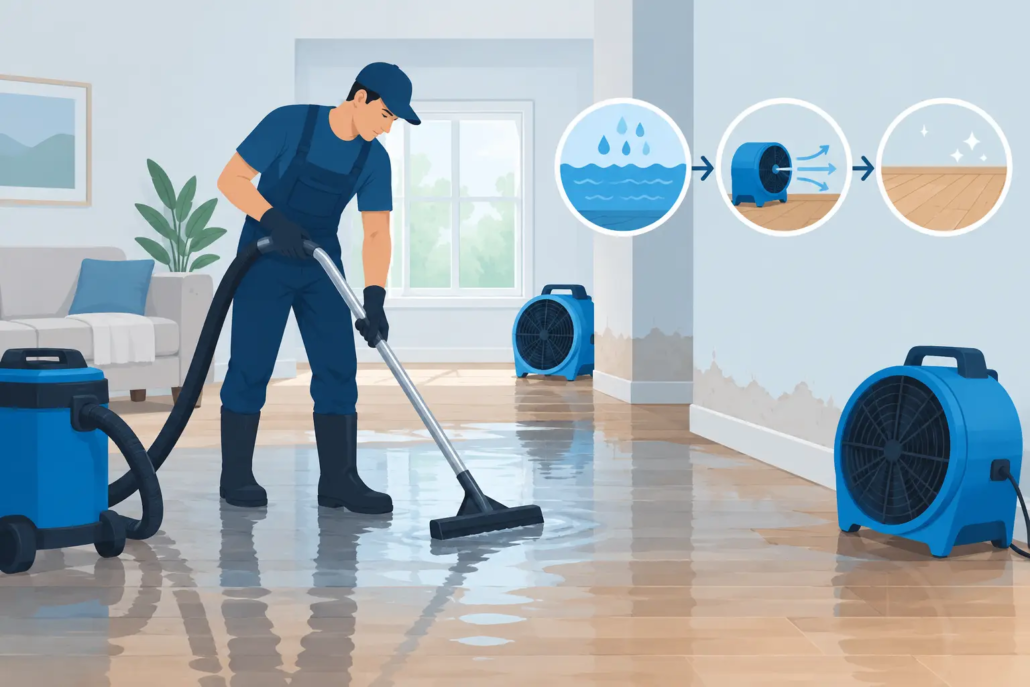
Professional restoration is more than extracting visible water. The goal is to return the affected building materials to an acceptable dry condition while preventing contamination from spreading into unaffected areas.
Inspection identifies what is wet beneath the surface
A floor can feel dry underfoot while the subfloor, adhesive, wall framing, or padding remains wet. Restoration technicians use moisture meters, thermal imaging, and other inspection methods to map the affected area. This establishes which materials can be dried in place, which need removal, and where drying equipment must be focused.
This step is especially important with floating floors and carpet. Water can travel well beyond the visible wet spot, becoming trapped beneath planks or in padding. In a commercial space, it may also move under partitions, shelving, cabinetry, or equipment bases.
Extraction removes water before drying begins
Water extraction is usually the most time-sensitive part of the job. Commercial extraction equipment removes far more water than towels, household vacuums, or mops. The less water left in the materials, the faster and more effectively drying can begin.
With carpet, technicians may use weighted extraction tools to pull water through the fibers and backing. Whether the carpet can be saved depends on the water category, the length of exposure, the condition of the padding, and whether odors or microbial growth are present. Padding is inexpensive compared with the risk of leaving contaminated or heavily saturated material beneath a cleaned carpet.
Controlled drying protects the structure
Air movers and commercial dehumidifiers work together to pull moisture from flooring, subfloors, walls, and surrounding air. Placement matters. Blasting air across a floor without controlling humidity can be ineffective, and excessive heat can damage some materials.
Technicians monitor moisture levels throughout the process rather than guessing based on how a room looks or smells. Drying is complete when materials reach appropriate targets, not simply when the surface no longer feels damp. That verification helps prevent mold growth, cupping wood, loose tile, and lingering odors after the crew leaves.
What Can Be Saved After Floor Flooding?
The answer is not the same for every floor. Material type, water contamination, installation method, and response time all affect whether repair is practical.
Solid hardwood can sometimes be dried and refinished after a clean-water loss caught early. Boards may cup, crown, separate, or stain as they absorb moisture, so the floor should be dried gradually and evaluated before replacement decisions are made. Sanding too soon can make an uneven floor worse. If sewage or floodwater reached the wood and subfloor, removal is often the safer choice.
Engineered hardwood is less forgiving. Its layered construction can delaminate when water reaches the core or adhesive. Some floating engineered planks may need to be removed so the subfloor can dry, even if a portion of the material is later reusable.
Laminate flooring usually needs replacement once water reaches the seams. Its fiberboard core swells easily, and surface drying does not reverse that damage. Vinyl plank and tile can be more water-resistant, but water may still collect beneath floating planks or around edges. The flooring may need to be lifted to inspect and dry the subfloor.
Ceramic and porcelain tile resist water well, but the assembly beneath them may not. Moisture can enter through cracked grout, failed caulk, loose tiles, or the perimeter of the room. A wood subfloor beneath tile can swell and weaken, while moisture under the installation can create odor or mold conditions. Concrete slabs can also hold moisture and require measured drying before new flooring is installed.
Carpet presents the widest range of outcomes. Clean water that is extracted quickly may allow some carpet to be cleaned and restored. Floodwater and sewage-exposed carpet should not be treated as a simple cleaning job. Replacement, disinfection of the underlying structure, and controlled drying are generally the responsible path.
Do Not Cover Up a Wet Subfloor
One of the costliest mistakes after a flood is installing new flooring over a subfloor that has not been properly dried and tested. New materials can hide stains and make a room look finished, but they can also trap moisture where it feeds mold, causes adhesive failure, or warps the replacement floor.
Subfloor damage may require selective removal, structural repairs, antimicrobial treatment where appropriate, and drying before reconstruction begins. Baseboards, lower drywall, toe-kicks, and cabinetry may also need attention because water commonly wicks upward from the floor.
This is where using one accountable provider can reduce stress. Instead of coordinating extraction, demolition, mold evaluation, flooring repair, and reconstruction among separate vendors, Renew Cleaning & Restoration can manage the project from inspection through final repairs. That continuity makes it easier to document the loss, keep the work moving, and make sure restoration does not stop at a dry-looking surface.
When to Call for Immediate Help
A small clean-water spill that is dried within minutes may be manageable. A flooded room is different. Call for professional help when water has reached multiple rooms, soaked carpet or wood flooring, entered walls, come from a sewer or outside flood source, or sat for more than a few hours. Fast action is also essential when the property houses children, older adults, patients, tenants, customers, or sensitive equipment.
Avoid using household fans on contaminated water. Do not try to disinfect sewage-affected carpet or padding yourself. And do not assume a musty smell will disappear after the floor surface dries. Those conditions call for trained cleanup, moisture measurement, and, when needed, safe removal of affected materials.
Protect the Floor, Then Restore the Space
The best time to save a floor is in the first hours after water enters the property. Move valuables out of the affected area if it is safe, document the damage, stop the source, and get the water extracted quickly. After that, let moisture readings and material conditions guide the repair decisions, not appearances alone.
A flood does not have to leave you juggling cleanup crews, flooring installers, and repair contractors while trying to protect your property. With a prompt, complete response, the path from a wet floor to a safe, usable space can be clear and manageable.