How Can I Help My Family Member Who Is a Hoarder?
When a loved one’s home is filled beyond what is safe or usable, the problem can feel overwhelming long before anyone says the word “hoarding.” You may be worried about falls, fire risk, pests, odors, eviction, or your family member’s health. If you are asking, how can I help my family member who is a hoarder, start here: lead with care for the person, not frustration with the belongings.
Hoarding is rarely solved by one hard conversation or one weekend of cleaning. Progress usually takes patience, clear safety boundaries, and support that respects your loved one’s dignity while addressing real property hazards.
Start With Concern, Not a Demand
It is understandable to want to say, “We have to get this cleaned up now.” But an ultimatum can make someone feel ashamed, controlled, or unsafe. That often leads them to shut down, refuse help, or bring more items into the home after a forced cleanout.
Choose a calm time to talk privately. Focus on what you have noticed and why it worries you. You might say, “I’m worried because the hallway is difficult to walk through,” or, “I want to make sure you can safely use the kitchen and bathroom.” Be specific, gentle, and honest.
Avoid calling possessions junk, trash, or worthless. Even items that appear unusable to you may carry powerful memories or a sense of security for your family member. You do not have to agree with the value of every item to show respect for the person holding onto it.
Ask permission before touching anything
One of the fastest ways to lose trust is to remove items without consent. Unless there is an immediate danger, do not throw away, donate, or move belongings behind your loved one’s back. A surprise cleanout can be traumatic and may make future cooperation much harder.
Instead, ask where they would be willing to begin. A small, practical goal is often more effective than trying to reclaim an entire house at once. For example, you might work toward clearing a path from the bedroom to the bathroom, opening access to the front door, or making one kitchen counter usable.
Address Immediate Safety Risks First
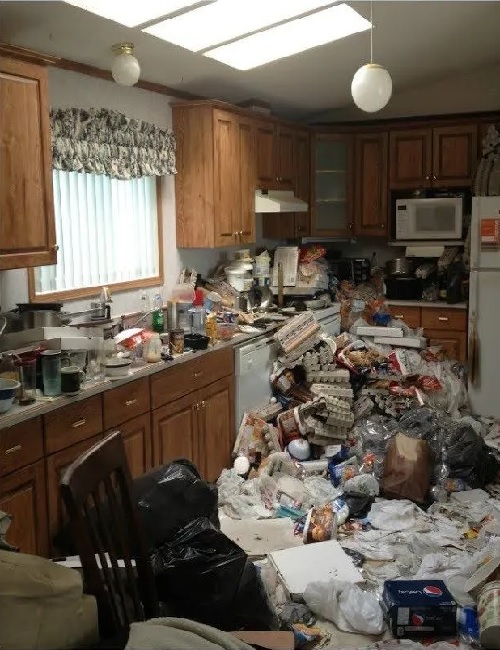
Compassion and safety can exist together. If the home has blocked exits, exposed wiring, unsafe stacks of items, spoiled food, animal waste, insect activity, mold, standing water, or strong odors, the situation may require faster action. A home can become hazardous even when the person living there does not see the risk clearly.
Focus first on conditions that could cause injury, illness, or property loss. The priority is not making the home look perfect. It is making the space safer to enter, exit, sleep, cook, bathe, and receive care.
Certain conditions call for professional help instead of family cleanup efforts. These include feces or urine contamination, needles, bodily fluids, dead animals, heavy mold growth, sewage, structural damage, fire hazards, infestations, or rooms that cannot be safely accessed. Gloves and trash bags are not enough protection for every situation, and disturbing contaminated materials can spread hazards through the property.
If there is an immediate threat of fire, a medical emergency, suspected structural collapse, or no safe way to exit the home, contact emergency services. If the danger is serious but not immediate, document the concern and arrange a professional inspection as soon as possible.
Make a Plan Your Family Member Can Tolerate
A workable plan is usually slower than relatives want and more structured than the homeowner expects. Set a short session, a defined area, and a realistic stopping point. A two-hour session in one room may be more productive than an exhausting all-day push that ends in conflict.
Let your loved one make as many decisions as possible within safe limits. They may be willing to sort obvious trash, expired food, broken items, or duplicate products first. Keep categories simple: keep, donate, recycle, discard, and decide later. A “decide later” container can prevent every choice from becoming an argument, but it needs a clear review date so it does not become another permanent pile.
Do not try to organize around dangerous conditions. If there are contaminated areas, pests, or excessive debris, the right first step may be removal and sanitation rather than sorting every item. This is where an experienced cleanup crew can protect the property and create a safe starting point without treating your family member like a problem to be removed.
Set boundaries you can keep
Helping does not mean accepting unsafe conditions or taking on more than you can manage. You may need to say that you cannot bring children into the home until walkways are clear, cannot store additional belongings at your house, or cannot continue paying for storage units without a plan.
State boundaries calmly and connect them to safety, finances, or your own capacity. Do not make promises you cannot keep. Clear, consistent limits are kinder than repeated threats that are never followed through.
Encourage the Right Kind of Support
Hoarding behavior can be connected to anxiety, grief, depression, trauma, obsessive-compulsive symptoms, cognitive changes, or other challenges. Family members cannot diagnose the cause, and a cleanup team is not a substitute for mental health care. Still, practical cleanup and emotional support often need to happen together.
Encourage your loved one to speak with a licensed therapist, physician, or mental health provider who understands hoarding behaviors. If they are resistant, start with the goal they care about most: staying in their home, hosting family again, avoiding a lease violation, or safely receiving home health care.
For some families, involving a trusted friend, faith leader, social worker, property manager, or attorney can help create a clearer path forward. The best support depends on the person’s circumstances. An older adult with memory concerns may need medical evaluation, while a tenant facing eviction may also need quick coordination with the landlord and a cleanup provider.
Know When Professional Hoarding Cleanup Is the Safer Choice
A professional hoarding cleanup team is useful when the scale of the work exceeds what family can safely or realistically handle. This is especially true when clutter has affected multiple rooms, sanitation has been compromised, odors have spread, or the property needs repairs after removal.
Look for a provider that understands both the emotional and physical sides of the job. The goal should be to remove hazards discreetly, protect items identified for saving, and restore usable space without unnecessary judgment. Before work begins, ask how the crew handles personal documents, valuables, photos, medications, and items your loved one wants to keep.
A complete plan may include inspection, sorting support, debris removal, deep cleaning, disinfection, odor treatment, pest-related sanitation, mold or water-damage remediation, and repairs to floors, walls, plumbing, or other damaged areas. Using one accountable provider can reduce the pressure of coordinating multiple crews during an already difficult time.
Renew Cleaning & Restoration handles sensitive hoarding cleanup projects throughout Texas with a respectful, end-to-end approach. When conditions involve contamination, major debris removal, odors, damage, or reconstruction needs, trained professionals can manage the cleanup and restoration process from the initial assessment through the final repair.
Protect Progress After the Cleanup
A cleared home can become cluttered again if the underlying habits and stressors are not addressed. That does not mean the cleanup failed. It means ongoing support matters.
Help create routines that are simple enough to maintain. Regular trash pickup, a weekly walkthrough of key living areas, limits on new purchases, and scheduled donations can make a meaningful difference. Prioritize the rooms needed for daily life: entrances, hallways, bathrooms, the kitchen, and sleeping areas.
Be prepared for setbacks. Progress may be uneven, and your loved one may feel regret or anxiety after items are removed. Keep returning to the shared goal of safety, comfort, and independence rather than using setbacks as proof that they cannot change.
Your family member needs compassion, but you also deserve support and relief. Take one safe, respectful step at a time, and bring in qualified help when the property conditions are more than your family can responsibly handle.