How Hoarding Affects Families and What Helps
A hallway narrowed to a single path can change the way an entire family lives. People stop inviting friends over. Adult children worry about a parent falling. Siblings argue about what to do next. Understanding how hoarding affects families starts with seeing that the problem is not simply a messy home. It can reshape relationships, create real property hazards, and leave everyone involved feeling ashamed, frustrated, or powerless.
Families often wait to address the situation because they do not want to betray a loved one, start a fight, or make a difficult situation worse. Those concerns are understandable. But when clutter blocks exits, attracts pests, causes odors, hides water damage, or makes rooms unusable, waiting can increase the emotional and physical cost for everyone.
How Hoarding Affects Families at Home
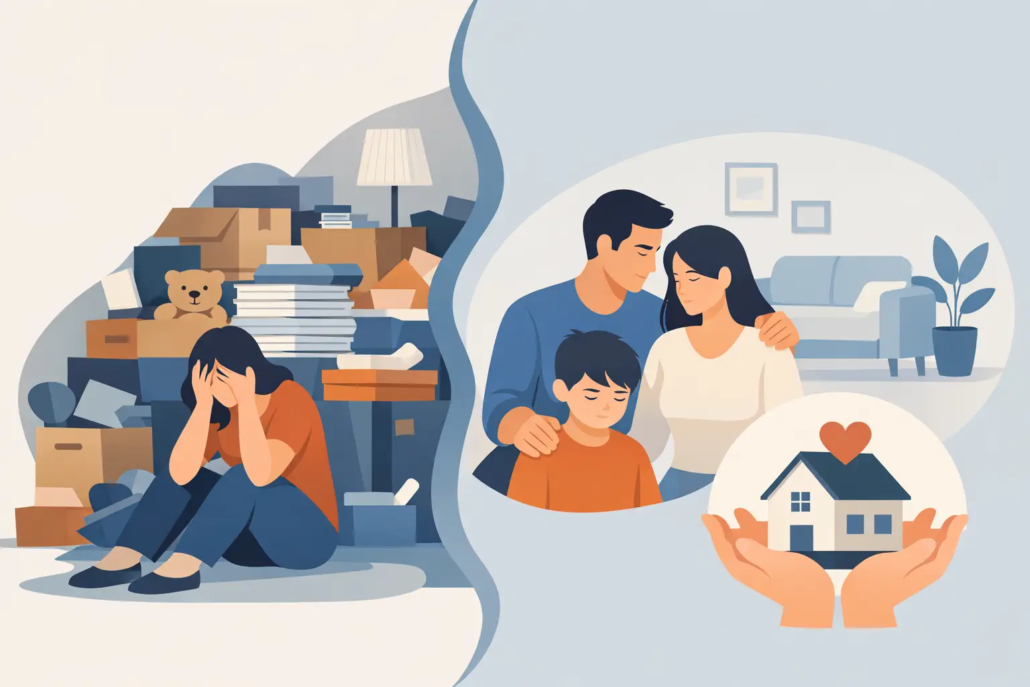
Hoarding conditions affect each person in the household differently. The individual living with the accumulation may feel comfort, security, or intense anxiety at the thought of items being removed. Family members may see hazards that feel urgent and obvious. That difference in perspective can make even a well-meant conversation feel like an attack.
Children living in a hoarded home may have little privacy, limited space to study or sleep, and few opportunities to have friends visit. They can become highly protective of the household secret, which may lead to isolation and stress. Spouses and partners may feel pushed aside when shared rooms, finances, or routines are controlled by the accumulation.
For adult children, the pressure often arrives later but fast. A fall, hospital stay, code complaint, pest issue, eviction notice, or pending home sale can turn years of concern into an immediate crisis. Suddenly, they are trying to protect a parent while also managing a property that may need extensive cleaning, repairs, and sanitation work.
Trust can break down on both sides
Arguments about possessions are rarely just about possessions. A family member may be trying to reduce fire risk or clear a path to the bathroom. The person who hoards may hear, “You do not respect me,” or “You are taking control away from me.” When belongings are discarded without consent, trust can be damaged even if the conditions truly require action.
At the same time, relatives should not be expected to ignore unsafe conditions indefinitely. Compassion does not mean pretending the situation is safe. A more productive approach acknowledges both realities: the items may carry powerful meaning, and the home still needs to be safe for people to live in.
The burden often falls on one person
Many families have one organizer: the sibling who gets calls from neighbors, the spouse who handles bills, or the estate representative who must prepare a home after a death. That person may spend months sorting, making decisions, coordinating contractors, and trying to keep peace among relatives.
This role can bring resentment, burnout, and conflict over money. It can also create tension when family members disagree about what should be saved, donated, documented, or removed. Clear responsibilities and an outside professional assessment can reduce some of that pressure. The goal is not to force one exhausted relative to become a cleanup crew, project manager, and counselor all at once.
Safety Risks Families May Be Living With
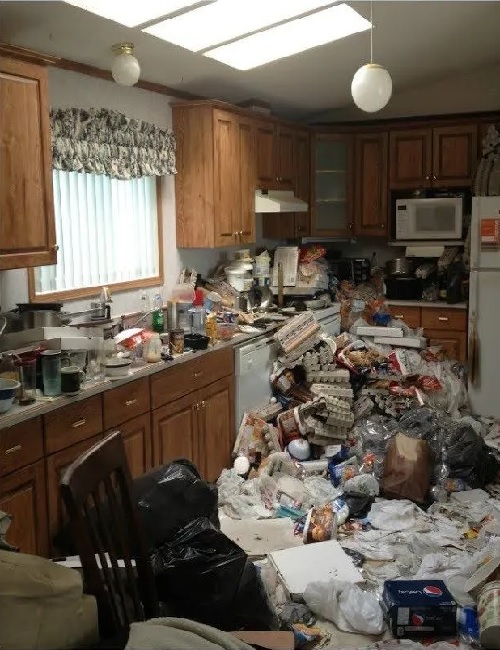
Not every cluttered house requires specialized remediation. The level of risk depends on the amount of accumulation, the condition of the property, the presence of animals or waste, and whether essential areas can be used safely. Still, severe hoarding conditions can hide hazards that are easy to miss until someone gets hurt.
Blocked doors, hallways, and stairs can slow evacuation during a fire or medical emergency. Stacked materials may fall, while overloaded outlets and inaccessible appliances can raise fire concerns. Moisture trapped beneath belongings can lead to mold growth, warped flooring, and structural damage. Food waste, animal waste, insects, and rodents can create sanitation problems that affect the entire household.
A professional cleanup team is particularly valuable when there are multiple hazards or when the property needs more than hauling. Conditions may require personal protective equipment, odor treatment, deep cleaning, pest-related sanitation, mold assessment, damaged-material removal, and repairs before rooms can be used again.
Consider professional help when a home has:
- Blocked exits, stairs, kitchens, bathrooms, or sleeping areas
- Strong odors, pest activity, animal waste, spoiled food, or biohazard concerns
- Water damage, mold, damaged flooring, or areas that cannot be safely accessed
- A lease deadline, code issue, estate timeline, sale, or return-to-home deadline
Why a Fast Cleanup Is Not Always the Best First Move
When a family reaches a breaking point, the urge to clear everything out in one day can be strong. In an emergency involving fire hazards, contamination, blocked exits, or an unlivable home, immediate action may be necessary. But a rushed approach can also cause lasting family damage if important documents, valuables, photographs, medications, or personal items are removed without a process.
It depends on the condition of the home and the person’s willingness to participate. When it is safe to do so, establish priorities before work begins. Start with access and life-safety areas: exits, pathways, bathrooms, kitchens, bedrooms, and utilities. Identify items that must be protected, such as legal documents, financial records, family photos, heirlooms, and clearly labeled valuables.
A compassionate cleanup plan does not mean sorting every item forever. It means making decisions with enough structure that the family can restore safety without creating unnecessary trauma. In severe cases, a trained crew can follow the family’s instructions, separate designated items for review, and remove debris and damaged materials efficiently and discreetly.
A Practical Way to Start the Conversation
The first conversation can set the tone for everything that follows. Avoid opening with labels, threats, or a demand to “just throw it all away.” Focus on specific conditions and shared goals. For example: “I am worried because the front door and hallway are blocked, and I want you to be able to get out safely if you need help.”
Use calm, observable facts rather than judgments about cleanliness or character. Listen for what the person fears losing. Sometimes the answer is financial security, a memory, a sense of identity, or fear that others will take over. You may not be able to solve those feelings in one discussion, but listening can make it easier to agree on the first practical step.
If direct conversation repeatedly becomes hostile or unsafe, consider involving appropriate support. That might include a mental health professional, physician, social worker, attorney, landlord, property manager, or trusted family member, depending on the circumstances. If someone is in immediate danger or unable to care for themselves, seek local emergency or adult protective resources.
Restoring the Property Without Adding More Stress
A hoarding cleanup is often only the beginning. Once accumulated material is removed, families may discover stained subfloors, damaged drywall, mold, plumbing leaks, pest damage, or odors that have penetrated surfaces. This is where coordinating several separate vendors can become another source of stress.
For Texas families facing extensive conditions, Renew Cleaning & Restoration can handle the work from inspection and removal through sanitation, odor treatment, remediation, repairs, and reconstruction when needed. One accountable team helps reduce handoffs at a time when the family already has enough decisions to make. Discretion matters too. Professional crews should arrive ready to work respectfully, protect the property, and communicate clearly about the scope, timeline, and next steps.
Before selecting any cleanup provider, ask what happens after removal. Can the company address hidden damage? Are they equipped for biohazard or sanitation concerns? Will they document conditions for an insurer, property manager, estate representative, or sale? A lower hauling quote may not be the lower overall cost if the home still needs cleaning, repair, and restoration afterward.
Give the Family a Safer Next Step
Families do not have to solve years of accumulation in a single conversation or weekend. Start by making one area safe, protecting essential items, and getting a clear view of the property’s actual condition. When the work is too large, hazardous, or emotionally charged to handle alone, bringing in trained, compassionate help can create room for the family to focus on the person, not just the piles.