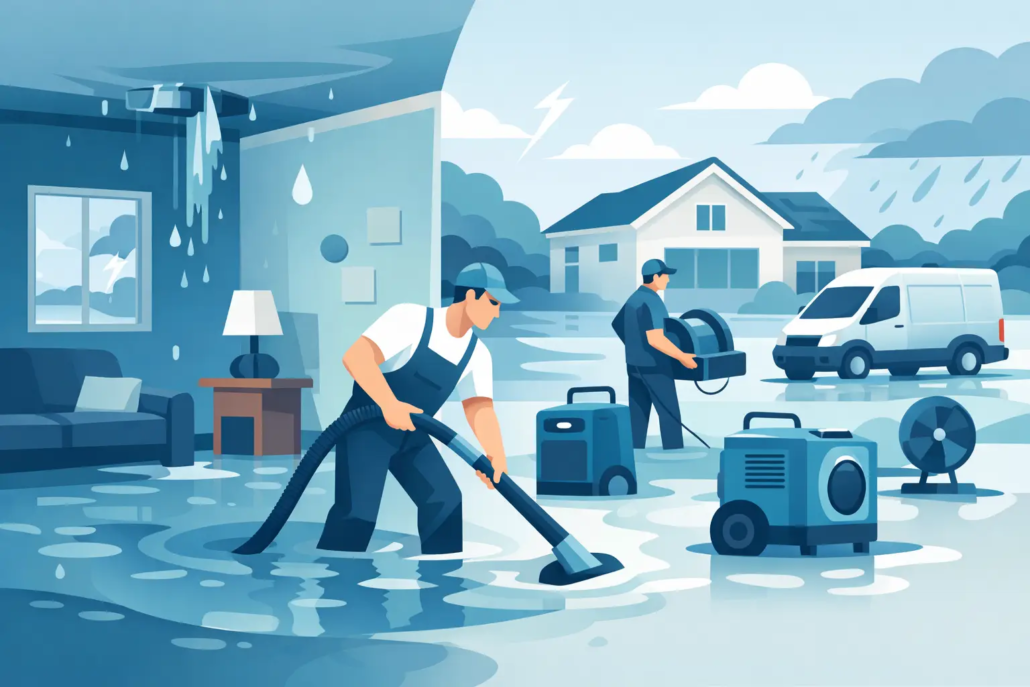
Water Restoration After a Leak or Major Flood
A pipe can leak behind a wall for days before it shows itself. A washing machine hose can fail in minutes and send water across several rooms. In either case, water restoration is not simply about removing visible water. It is about stopping damage at its source, drying materials completely, addressing contamination when needed, and returning the property to a safe, usable condition.
The first few hours matter. Water travels through flooring, under baseboards, into wall cavities, and down to lower levels. What looks like a small affected area can become a larger repair if moisture is left behind.
What Water Restoration Actually Includes
Effective water restoration follows the water, not just the stain it leaves on the ceiling or carpet. A professional response begins with identifying the source and making sure it has been stopped. Then the restoration team determines where water has traveled, what materials can be dried and saved, and what must be removed for health and structural reasons.
For a clean supply-line leak caught quickly, drying and limited repairs may be enough. A toilet overflow, sewage backup, floodwater intrusion, or water that has sat for an extended period requires a different level of containment, cleaning, and removal. The right plan depends on the source, the length of exposure, the materials affected, and whether contamination is present.
A complete project can include emergency extraction, moisture inspection, removal of damaged materials, structural drying, cleaning and sanitizing, odor treatment, mold prevention or remediation, repairs, and reconstruction. That end-to-end approach matters because drying a room is only one part of getting it back to normal.
What to Do Before Help Arrives
Safety comes first. If water is near outlets, electrical panels, appliances, or ceiling fixtures, stay out of the area until it is safe to enter. Do not walk through standing water if there is any chance of electrical exposure. If the water came from a sewer line, toilet, or unknown outdoor source, keep people and pets away from it.
If you can do so safely, shut off the water source. For an appliance leak, turn off the appliance and its supply valve. For a broken pipe, use the home or building’s main shutoff valve. Move dry valuables, documents, electronics, and lightweight furniture away from the affected area, but do not delay calling for help to start a major cleanup yourself.
Avoid using a household vacuum on standing water or placing fans in a contaminated area. Fans can spread contaminants, and surface drying can create a false sense that the problem is resolved while water remains beneath flooring or inside walls. Take clear photos and videos before moving items when possible. They can help document the loss for insurance purposes.
The First 24 Hours Set the Direction
A professional water restoration team starts with an inspection that goes beyond what the eye can see. Moisture meters, thermal imaging, and other detection tools help locate wet insulation, subflooring, framing, cabinetry, and wall materials. The goal is to create a drying plan based on actual conditions rather than guesswork.
Standing water is extracted first. Depending on the loss, crews may use portable extractors, truck-mounted equipment, pumps, or specialty tools for carpet and hard-surface flooring. Removing water quickly reduces the amount that can wick into porous materials.
Next comes controlled drying. Air movers and commercial dehumidifiers work together to pull moisture from materials and the air. In Texas, where heat and humidity can slow natural evaporation, proper equipment placement and regular monitoring are especially important. Simply opening windows or running a few household fans may not dry hidden areas adequately.
Technicians should return to monitor moisture levels, adjust equipment, and verify that materials are reaching an appropriate dry standard. This is why a one-time equipment drop-off is not the same as managed restoration. Drying needs to be measured, not assumed.
When Materials Can Be Saved and When They Cannot
Not every wet item needs to be discarded. Solid wood furniture, some hardwood flooring, framing, and nonporous surfaces can often be dried and restored when the water is clean and the response is fast. Carpet may be salvageable after a clean-water incident if extraction and drying begin promptly.
Other materials are less forgiving. Wet drywall can lose structural integrity, insulation can hold moisture deep inside a wall, and particleboard cabinets can swell and break down. Porous materials exposed to sewage or floodwater commonly need removal because cleaning cannot reliably make them safe.
There is a trade-off between preserving materials and preventing a more serious problem later. Removing a section of drywall or flooring may feel disruptive, but targeted removal can give technicians access to trapped moisture and prevent mold growth, odor, and structural deterioration. A responsible restoration plan explains why each recommendation is being made.
Clean Water, Gray Water, and Contaminated Water
The water category changes the response. Clean water generally comes from a sanitary source, such as a supply line or overflowed sink without contaminants. Gray water may contain chemicals or microorganisms from showers, washing machines, or dishwashers. Water from sewage backups, toilet overflows involving waste, outdoor flooding, or certain drain failures is considered highly contaminated.
Contaminated water losses require protective equipment, controlled removal, cleaning, and disinfection procedures. The priority is not just drying the building. It is protecting occupants, workers, and anyone who will use the space afterward.
Hidden Moisture Is Where Bigger Problems Begin
The visible puddle is rarely the whole story. Water can travel under vinyl plank flooring, behind cabinets, through insulation, and into adjacent rooms. A ceiling stain below an upstairs bathroom may indicate a localized plumbing issue, or it may mean water has spread across a wider section of the floor assembly.
When moisture stays in building materials, mold can begin to develop under the right conditions. Mold is not guaranteed after every leak, but the risk increases with delayed drying, high humidity, and porous materials that remain wet. Musty odors, bubbling paint, warped floors, loose baseboards, and recurring discoloration are all reasons to investigate rather than cover up the symptom.
This is also why cosmetic repair should wait until drying is complete. Repainting a water-stained wall before the cavity is dry may hide the evidence without solving the issue. Repairing in the right order protects the work that comes after it.
One Provider Makes a Difficult Project Easier
Water damage often creates a chain of separate needs: extraction, demolition, drying, cleaning, mold assessment, plumbing coordination, flooring replacement, drywall repair, painting, and final cleaning. When property owners must locate a different vendor for every stage, delays and gaps in responsibility can follow.
Renew Cleaning & Restoration handles water losses from inspection and emergency mitigation through repairs and reconstruction. That means one accountable team can document conditions, manage the cleanup, explain the scope of work, and carry the project through to a finished space. For homeowners, landlords, facility managers, and adjusters, that continuity can reduce confusion during an already stressful event.
Insurance claims add another layer. A restoration company cannot decide coverage, but thorough documentation of the source, affected materials, readings, photos, and work performed can help support the claims process. Ask questions about the scope, what is being removed, what can be saved, and what repair work will be needed after mitigation. Clear answers early help prevent surprises later.
When to Call for Water Restoration
Call promptly when there is standing water, wet carpet or drywall, a ceiling leak, a plumbing failure, an appliance overflow, a roof leak, flooding, sewage exposure, or a persistent musty odor after a water event. Even a small leak deserves attention when it involves walls, flooring, cabinets, or a lower level.
For businesses, fast action can also protect operations. Water in an office, medical facility, retail space, apartment building, or managed property can affect tenants, inventory, equipment, and occupancy. A 24/7 response is valuable because water damage does not wait for normal business hours.
The best time to address water damage is before a damp wall becomes a demolition project. Shut off the source if it is safe, protect people from hazards, document what you can, and bring in trained help early. A calm, complete response can save materials, reduce downtime, and give you a clear path from disruption to repair.