How to Disinfect Sewage Contamination Safely
A sewage backup is not a typical cleaning problem. It can carry bacteria, viruses, parasites, and contaminated water into flooring, walls, belongings, and HVAC-adjacent spaces. Knowing how to disinfect sewage contamination starts with one priority: keep people and pets away from the affected area until the source is stopped and the hazard has been assessed.
Even a small toilet overflow can become a serious sanitation issue if it contains wastewater from drains or sewer lines. If sewage has spread beyond a contained, easy-to-clean surface, professional remediation is usually the safer choice. The visible mess is only part of the problem. Moisture and contamination can travel under flooring, behind baseboards, and into porous materials long after the water appears gone.
First, Stop Access and Control the Source
Do not walk through sewage water if you can avoid it. Keep children, pets, residents, employees, and customers out of the area. If wastewater is still entering the property, stop using plumbing fixtures connected to the affected line and contact a licensed plumber or appropriate utility provider to address the source.
Turn off electricity to the affected area only if it can be done without entering standing water or touching wet electrical equipment. Never use a household vacuum, shop vacuum not rated for contaminated water, or fans that could spread contamination to unaffected rooms.
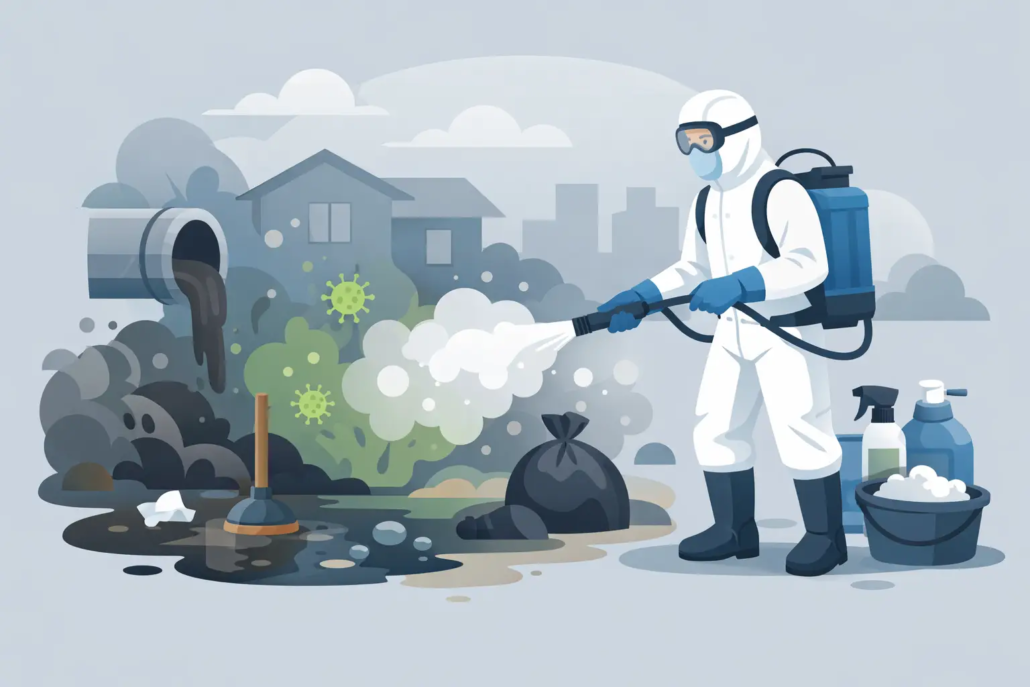
For a very limited spill on a hard, nonporous surface, wear proper protective equipment before approaching it. That generally means waterproof gloves, rubber boots, eye protection, and a properly fitted respirator or mask appropriate for the work. Cover cuts and scrapes before putting on gloves. Remove protective gear carefully afterward so contaminated surfaces do not touch your skin, clothing, vehicle, or clean areas of the property.
Why Sewage Cleanup Requires More Than Disinfectant
Sewage is commonly treated as Category 3 water, often called black water. This classification reflects its potential to contain harmful microorganisms and waste. Spraying a disinfectant over standing water or wiping the floor once does not make the space safe.
Effective sanitation follows a sequence. The sewage must be removed first. Remaining soil and organic debris must be cleaned away, because disinfectants cannot reliably work through visible contamination. Surfaces then need to stay wet with an appropriate disinfectant for the product’s required contact time. Finally, the area must be thoroughly dried to reduce the chance of mold growth and material deterioration.
This is why the condition and type of material matter. Tile, sealed concrete, metal, and some sealed hard surfaces may be cleaned and disinfected when the contamination is addressed quickly and completely. Carpet, carpet padding, insulation, untreated wood, upholstered furniture, paper goods, mattresses, and many other porous materials often cannot be reliably restored after direct sewage exposure. Trying to save everything can leave contamination and odor behind.
How to Disinfect Sewage Contamination Step by Step
The exact scope depends on how far the wastewater traveled, how long it sat, and which materials it touched. For a contained incident, the process generally follows these steps.
1. Remove contaminated water and waste
Use equipment designed for contaminated-water extraction, then collect solid waste and disposable cleanup materials in durable bags. Avoid sweeping dry debris or creating splashes. These actions can spread contaminants to nearby surfaces and into the air.
Professional crews establish containment before extraction when needed, especially in occupied homes, multifamily properties, offices, medical spaces, and retail environments. Containment helps prevent foot traffic, equipment, and airflow from carrying contamination into clean rooms.
2. Remove materials that cannot be safely cleaned
Dispose of sewage-affected porous materials according to local requirements. In many cases, this includes carpet and padding, wet insulation, damaged drywall, particleboard furniture, and personal items that absorbed wastewater. Drywall may need to be removed above the water line when moisture has wicked upward.
This can feel wasteful, particularly when the affected items have sentimental or financial value. But sanitation decisions should be based on whether a material can be fully cleaned, disinfected, and dried – not just whether it looks acceptable after surface cleaning.
3. Clean before applying disinfectant
Wash hard, nonporous surfaces with detergent and clean water to remove organic soil. Use separate tools for contaminated and clean zones. Rags, mop heads, sponges, and disposable brushes used in the affected area should not be reused elsewhere unless they can be properly decontaminated.
Do not mix cleaning chemicals. Bleach combined with ammonia, acids, or certain other products can create dangerous fumes. If you use an EPA-registered disinfectant, follow the label precisely for dilution, ventilation, personal protective equipment, and contact time. More product is not automatically safer or more effective.
4. Disinfect, dry, and verify the area
Apply the disinfectant to cleaned surfaces and keep them visibly wet for the full label contact time. Wiping it off immediately may reduce its effectiveness. Pay attention to baseboards, wall edges, door thresholds, cabinet bases, plumbing fixtures, and other areas where wastewater may have splashed or wicked.
Drying is not an optional final touch. Use professional air movement and dehumidification equipment as appropriate, and monitor moisture in structural materials. A room can feel dry while subflooring, wall cavities, or framing remains wet. Moisture left behind can lead to mold, warped flooring, odors, and further repairs.
When a Sewage Cleanup Is Too Large for DIY Work
A homeowner may be able to address a minor, contained overflow on a nonporous bathroom floor after the plumbing issue is corrected. The situation changes quickly when sewage reaches carpet, walls, furniture, multiple rooms, crawlspaces, HVAC components, or commercial work areas.
Call a qualified sewage remediation team when there is standing black water, widespread contamination, strong persistent odor, damaged building materials, or any concern that water traveled beneath floors or inside walls. Professional help is also appropriate when someone in the property has a weakened immune system, when a business must reopen safely, or when you need documentation for an insurance claim.
A complete restoration provider can coordinate the work in the order it needs to happen: inspection, containment, extraction, removal of unsalvageable materials, cleaning and disinfection, drying, odor control, repairs, and reconstruction. That avoids a common problem after sewage damage – one company removes the mess, but the owner is left finding separate vendors for drying, flooring, drywall, and rebuild work.
For Texas homes and businesses, Renew Cleaning & Restoration can manage that full process with emergency response, discreet handling, and one accountable team from damage assessment through repairs. Prompt action often limits the amount of material that must be removed and helps protect the property from secondary damage.
Protecting the Rest of the Property After Cleanup
Do not move potentially contaminated furniture, boxes, or equipment into clean rooms until they have been evaluated. Launder washable clothing separately using the hottest water suitable for the fabric, and clean shoes before wearing them in unaffected parts of the property. If sewage reached an HVAC return, ductwork, or mechanical closet, have those components assessed before running the system.
Keep records of the incident. Take photographs before cleanup when it is safe to do so, save plumbing invoices, and document damaged contents and materials removed. This information can help with insurance communication and future repair decisions.
A sewage backup is disruptive, unpleasant, and sometimes emotionally overwhelming. The safest path is to treat it as a sanitation emergency rather than a deep-cleaning project. Get the source repaired, prevent exposure, and make sure the affected space is cleaned, disinfected, dried, and restored thoroughly enough for people to use it with confidence.