How Does Renew Cleaning Help a Family Member Who Hoards?
When a loved one’s home becomes overwhelmed by possessions, the problem can quickly move beyond clutter. Blocked exits, pests, damaged floors, spoiled food, animal waste, mold, and unsafe air quality can put both the resident and family at risk. If you are asking, “How does Renew Cleaning help my family member who is a hoarder?” the answer starts with a respectful plan that protects the person, the property, and everyone involved.
Hoarding cleanup is not about judging someone’s belongings or rushing a family through an emotional decision. It is about restoring safe access to the home and addressing sanitation hazards while treating your family member with patience and dignity.
How Renew Cleaning Helps a Family Member Who Hoards
A professional hoarding cleanup team brings structure to a situation that can feel impossible to manage alone. Renew Cleaning & Restoration can inspect the property, identify immediate hazards, create a practical cleanup sequence, remove debris, sanitize affected areas, and coordinate repairs when the condition of the home requires more than cleaning.
That all-in-one approach matters. A severe hoarding situation may involve more than bags and boxes. There may be contaminated materials, hidden water damage, odors that have settled into walls and flooring, pest activity, mold growth, or structural damage caused by long-term neglect. Instead of asking a family to find separate cleaners, remediation crews, contractors, and junk removal providers, one accountable team can manage the project from the first walkthrough through final restoration.
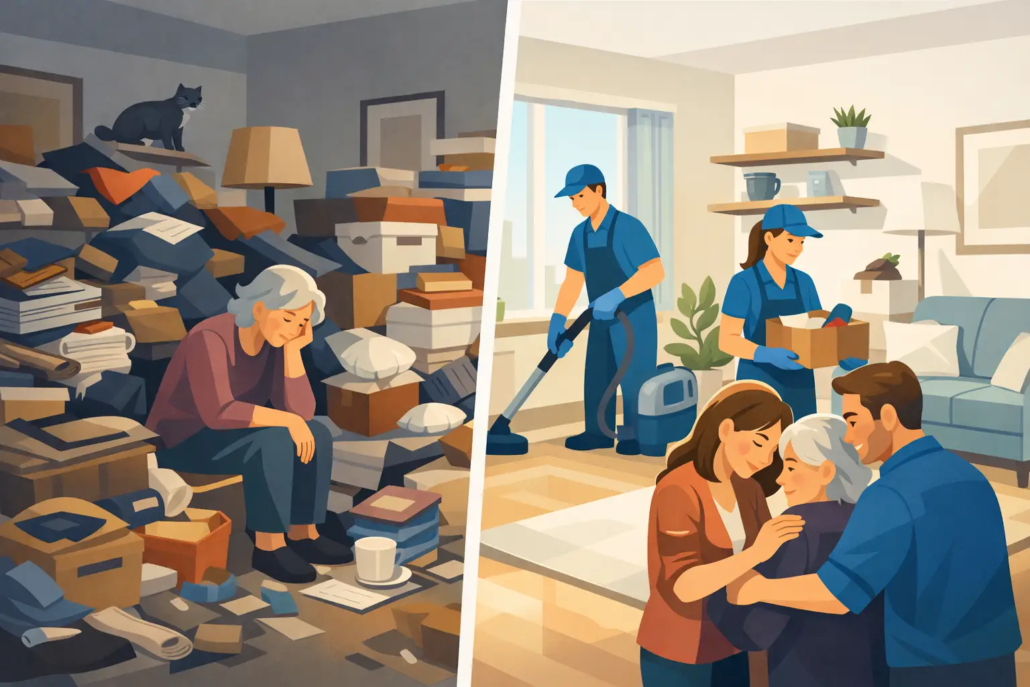
Just as important, professionals know how to work without turning the cleanup into a confrontation. Your loved one may feel embarrassed, fearful of losing important items, or overwhelmed by the pace of the work. A compassionate crew can help establish boundaries, follow agreed-upon priorities, and keep the focus on making the home safer.
The First Step Is Safety, Not Sorting Everything
Families often begin by trying to sort every item before calling for help. In mild situations, that may be reasonable. In a heavily affected home, however, trying to work through the property without a safety assessment can expose relatives to sharp objects, unstable stacks, rodent droppings, insects, bodily fluids, spoiled materials, mold, or compromised flooring.
The first professional walkthrough identifies what can be handled as ordinary clutter and what requires specialized treatment. For example, a room filled with newspapers may primarily need careful removal and cleaning. A room with animal waste, decomposing food, or unknown liquids may require personal protective equipment, containment, disinfection, and proper disposal procedures.
The team also looks for practical risks that families can miss in the moment: Are exits blocked? Can first responders enter if there is an emergency? Is there a clear path to the bathroom and kitchen? Is the electrical panel accessible? Are there signs of leaks, fire damage, or damage beneath piled belongings? These concerns help determine the safest order of work.
If there is an immediate threat to your loved one’s health or safety, such as a medical emergency, fire risk, no usable exit, or dangerous structural conditions, contact emergency services first. Cleanup can follow once the immediate danger is addressed.
A Plan That Respects the Person and the Home
Every hoarding cleanup plan should be tailored to the household. Some family members are ready to make decisions and want to participate. Others may be unable or unwilling to be present. The right approach depends on the property conditions, the level of risk, ownership questions, and whether the resident has given consent.
Professional cleanup does not replace mental health care or force a person to change behaviors. Hoarding disorder can be complex, and long-term progress may involve support from a therapist, physician, social worker, or trusted family network. Cleanup addresses the unsafe environment. Ongoing support helps reduce the chance that the conditions return.
Before work begins, it helps to decide which items deserve special attention. Important documents, family photographs, jewelry, legal paperwork, medications, financial records, and clearly identified valuables should be handled differently from general debris. Families can establish a keep, review, donate, and dispose process, but the process must remain realistic. In a hazardous home, safety and sanitation cannot wait indefinitely for every item to be evaluated.
What Professional Hoarding Cleanup Can Include
The scope of work varies widely. A home with accumulated possessions but no contamination may need removal, detailed cleaning, and odor control. A more severe property may require multiple services completed in a deliberate sequence.
Professional hoarding cleanup can include:
- Removal and disposal of unwanted contents, debris, and damaged materials
- Sorting support for pre-identified important belongings and documents
- Biohazard, animal waste, and sanitation cleanup when conditions require it
- Deep cleaning and disinfection of kitchens, bathrooms, bedrooms, and living spaces
- Odor treatment for persistent smoke, pet, mildew, or decomposition odors
- Mold, water-damage, pest-related, or contamination remediation when discovered
- Repairs and reconstruction for damaged drywall, flooring, cabinets, plumbing areas, and other affected surfaces
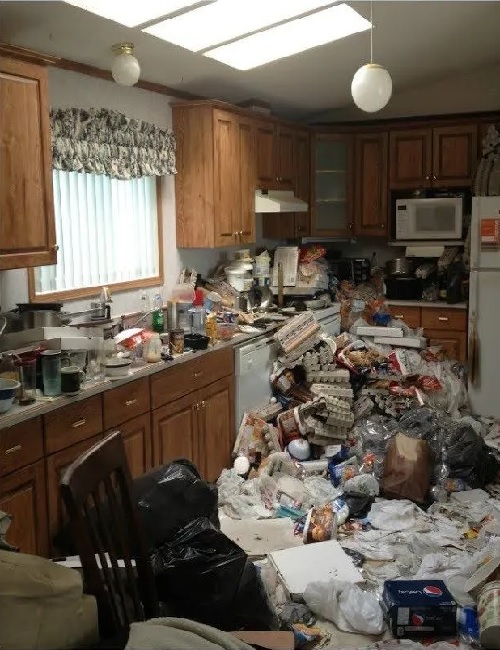
This is why a simple “junk hauling” solution is not always enough. Hauling can remove visible items, but it may not address what is underneath them. If moisture has damaged subflooring, pests have contaminated insulation, or odors have penetrated porous materials, the home may still be unhealthy or difficult to occupy after the contents are gone.
Why Families Should Avoid Taking on High-Risk Cleanup Alone
It is natural to want to protect a loved one by handling the job yourself. But large-scale cleanup is physically demanding, emotionally draining, and sometimes hazardous. Family members can become exhausted, injured, or frustrated, especially when they are carrying years of worry into the work.
There is also a relationship concern. When relatives become the sole cleanup crew, every decision about an item can feel personal. A professional team creates helpful distance. The family can remain focused on supporting their loved one while trained technicians manage removal, sanitation, and restoration tasks.
That does not mean family involvement is unnecessary. Your knowledge is often essential for identifying sentimental items, understanding property history, and making decisions about repairs. The goal is to give your family a defined role without placing the full physical and emotional burden on you.
Restoring Function Can Be More Meaningful Than Making It Perfect
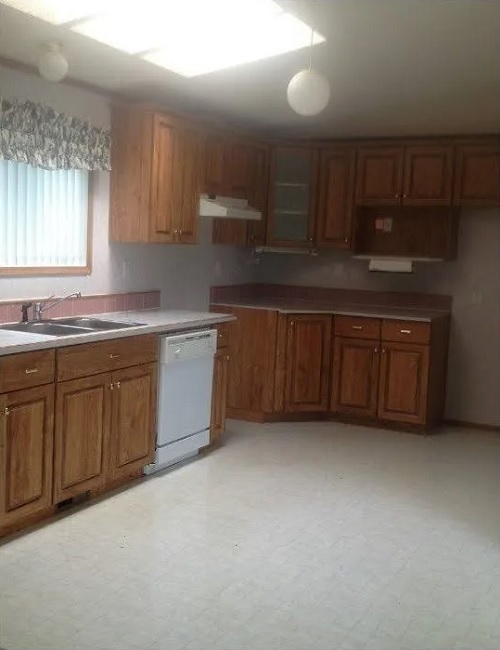
A successful cleanup is not always a picture-perfect house on day one. For many families, the immediate goal is more practical: clear safe walkways, restore a usable bathroom and kitchen, make bedrooms accessible, remove contaminated materials, and create conditions where the resident can receive care or remain safely at home.
After those urgent needs are met, the project can continue into deeper cleaning, repairs, and reconstruction. In some cases, a home needs new flooring, drywall replacement, cabinet repairs, or other restoration before it is ready for normal use, sale, rental, or occupancy. Having one provider manage both cleanup and repair reduces handoffs during an already difficult time.
For Texas families dealing with a property that has become unsafe or unlivable, a confidential inspection and clear estimate can turn an overwhelming situation into a workable next step. The kindest move is often not asking your loved one to solve everything at once. It is helping create one safe, respectful path forward – beginning with a call for professional help.