Sewage Backup Restoration Starts With Safety
A sewage overflow is not a mop-and-disinfect situation. The water may carry bacteria, viruses, parasites, and contaminants from toilets, drains, or sewer lines into flooring, walls, furniture, and HVAC-adjacent spaces. Proper sewage backup restoration begins by protecting people from exposure, stopping the source when possible, and treating every affected material with the level of care the hazard requires.
For homeowners, landlords, facility managers, and business owners, the pressure is immediate. A bathroom, kitchen, utility room, or lower level may be unusable within minutes. The right response can limit contamination, reduce structural damage, and make the path to repair much clearer.
Why a Sewage Backup Requires Professional Restoration
Restoration professionals often classify sewage-contaminated water as Category 3 water, sometimes called black water. This category can include waste from toilets, backed-up sewer mains, septic failures, or ground water mixed with sewage. Even when the water looks clear, it may contain microorganisms and chemicals that should not be handled casually.
The visible mess is only one part of the problem. Contaminated water can wick into drywall, insulation, baseboards, subflooring, cabinets, carpeting, and upholstery. If moisture remains behind walls or below flooring, odor, microbial growth, and material deterioration can follow. Cleaning the surface without addressing what the water reached can leave the property looking better while the underlying damage continues.
A professional response also creates a documented record of the loss. That can be helpful when working with an insurance carrier, property owner, tenant, adjuster, or commercial facility team. The scope should reflect what was affected, what was removed, what was cleaned, and what needs repair or reconstruction.
What to Do in the First Hours
Do not enter standing sewage water unless there is an immediate life-safety reason. Keep children, pets, customers, tenants, and unprotected staff away from the area. If the backup is ongoing, avoid flushing toilets, running sinks, using dishwashers, or doing laundry, since additional water can worsen the overflow.
If it is safe to do so, shut off water fixtures serving the affected area and contact a plumber or qualified drain professional to identify the cause. A blocked main line, failed sewer connection, broken pipe, tree-root intrusion, or overloaded septic system may need repair before cleanup can truly begin.
Move uncontaminated belongings away from the affected area if they can be removed without walking through the water. Take a few photos or videos from a safe location for documentation, but do not delay emergency cleanup to create a perfect record. The longer sewage remains in place, the greater the chance of contamination spreading into building materials.
Avoid using a household vacuum, shop vacuum, fan, or ordinary carpet cleaner on sewage water. These tools are not designed to decontaminate the area and may spread contaminated droplets or push moisture farther into materials. Opening windows can help with odor if conditions allow, but ventilation alone does not make a contaminated space safe.
The Sewage Backup Restoration Process
Every loss is different. A small toilet overflow contained on tile requires a different approach than a sewer backup that travels through carpeted rooms, offices, or multiple apartments. Still, a complete restoration process follows a practical sequence.
Inspection and containment
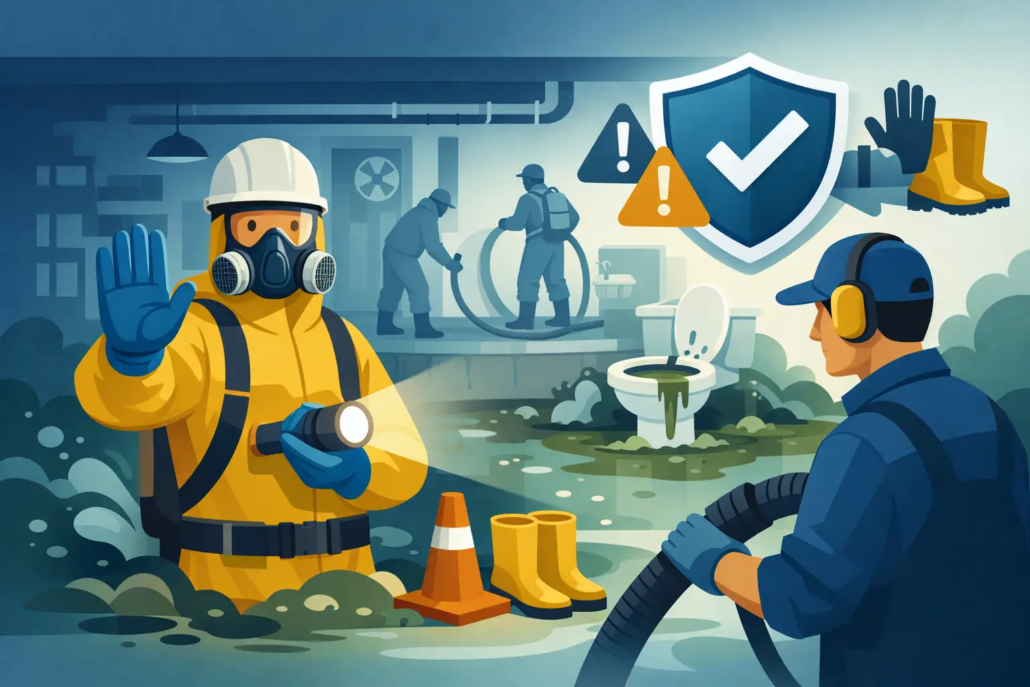
The first priority is identifying the affected area and preventing cross-contamination. Technicians assess the source, visible damage, moisture migration, and materials involved. They may establish containment around the work zone and use protective equipment appropriate for sewage exposure.
In commercial settings, the plan may also include safe access routes, temporary closure of affected areas, and coordination with maintenance teams, tenants, or operations leaders. The goal is to keep the cleanup controlled while minimizing unnecessary disruption to the rest of the property.
Removal of contaminated water and materials
Standing water is extracted using professional equipment designed for the job. Materials that cannot be reliably cleaned and disinfected may need to be removed. This often includes saturated carpet and padding, porous insulation, damaged drywall, particleboard cabinets, and certain upholstered items.
This can feel frustrating, especially when a room appears salvageable at first glance. However, the decision depends on the material, how long it was exposed, the extent of contamination, and whether it can be fully cleaned and dried. Keeping a contaminated porous material simply to avoid replacement may create a larger problem later.
Hard, nonporous surfaces such as tile, metal, glass, and some sealed surfaces can often be cleaned and disinfected when they remain structurally sound. Restoration should be based on conditions at the property, not on a one-size-fits-all rule.
Cleaning, disinfection, and odor control
After removal and extraction, affected surfaces are cleaned with appropriate methods and antimicrobial products. This is not the same as spraying a fragrance or bleach solution over the room. Effective work addresses soil, contamination, and odor sources in the correct order.
Odors can linger when residue remains below flooring, inside wall cavities, under cabinets, or within porous materials. Source removal is the foundation of odor control. Depending on the situation, additional deodorization methods may be used after cleaning and drying are underway.
Structural drying and verification
Sewage cleanup is also a water-damage project. Technicians use air movement, dehumidification, and moisture monitoring to dry the structure and prevent avoidable secondary damage. Moisture readings help show whether drywall, framing, subflooring, and other materials have returned to acceptable drying conditions.
Drying should not be rushed or guessed. A room can feel dry to the touch while moisture remains behind a baseboard or under a floor covering. Proper verification gives property owners a clearer basis for moving into repairs.
Repair and reconstruction
Cleanup is only part of getting life back to normal. Once the contaminated materials are removed and the structure is dry, the property may need new insulation, drywall, flooring, trim, cabinets, paint, or other repairs.
Coordinating cleanup with separate demolition crews, drying companies, and contractors can add stress at the worst possible time. An end-to-end provider can manage inspection, mitigation, removal, cleaning, repair, and reconstruction under one project plan. Renew Cleaning & Restoration handles this full process, so clients have one accountable team from the emergency response through the final repaired space.
Common Mistakes That Make a Backup Worse
The most costly mistake is treating sewage as ordinary water damage. Mopping, shampooing carpet, or covering odors with cleaners can leave contamination in place. Another common mistake is waiting to see if the area dries on its own. That delay can allow moisture to travel farther and increase the amount of material that requires removal.
People also sometimes discard items before documenting them or begin repairs before the source has been corrected. If the drain line or sewer issue is still active, a newly cleaned area can be contaminated again. Resolve the source, document the damage, complete remediation, then move into repairs.
For landlords and commercial properties, communication matters too. Occupants need clear instructions about restricted areas, restroom availability, and the expected timeline. Direct, calm updates help preserve trust while the work is underway.
When to Call for Emergency Help
Call for professional assistance immediately when sewage has entered carpeted areas, drywall, cabinets, multiple rooms, crawl spaces, or any space used by children, older adults, patients, customers, or employees. The same applies when the source is unknown, the water continues to rise, or the backup involves a main sewer line or septic system.
A limited toilet overflow on a hard, nonporous floor may have a smaller scope if it is stopped quickly and did not spread. Even then, use caution. If there is any uncertainty about where the water traveled or what it contacted, an assessment is the safer choice.
Sewage backups are disruptive, unpleasant, and often emotionally exhausting. Fast, careful action protects more than drywall and flooring. It gives you a clean, documented path forward and the confidence that the space is being made safe for the people who rely on it.