DIY Versus Trauma Cleanup: Know the Difference
A trauma scene can leave families, property owners, and managers facing a painful question before they have had time to process what happened: can we handle this ourselves? In DIY versus trauma cleanup, the difference is not simply effort or cleaning skill. It is the difference between surface cleaning and controlling a potential biohazard with the care, equipment, and documentation the situation may require.
When blood, bodily fluids, decomposition, or other potentially infectious materials are present, trying to clean the area alone can expose people to health risks and leave contamination hidden in places that ordinary cleaning cannot reach. The right next step is not to rush. It is to secure the area, limit access, and bring in qualified help that can handle the scene respectfully from cleanup through restoration.
Why trauma cleanup is not ordinary cleaning
A visible stain is only part of the problem. Bodily fluids can travel through carpet backing, flooring seams, subfloors, baseboards, furniture, drywall, and personal belongings. In a vehicle, they may reach seat foam, floor padding, door panels, or ventilation components. What appears contained at first can become a larger sanitation and odor issue if it is not assessed thoroughly.
Household cleaners are made for routine messes. They are not a complete solution for a biohazard scene. Even a strong disinfectant does not solve the problem if it cannot reach affected materials, if porous materials need to be removed, or if cleaning creates splashes and cross-contamination. A room can look clean while contamination remains below the surface.
There is also an emotional cost. Family members may feel pressure to clean because they want to protect privacy, save money, or regain control of the space. That response is understandable. But handling a traumatic scene personally can add lasting distress to an already difficult event. Professional cleanup creates space for people to focus on family, tenants, employees, or next steps rather than reliving the scene through the work.
DIY versus trauma cleanup: what changes
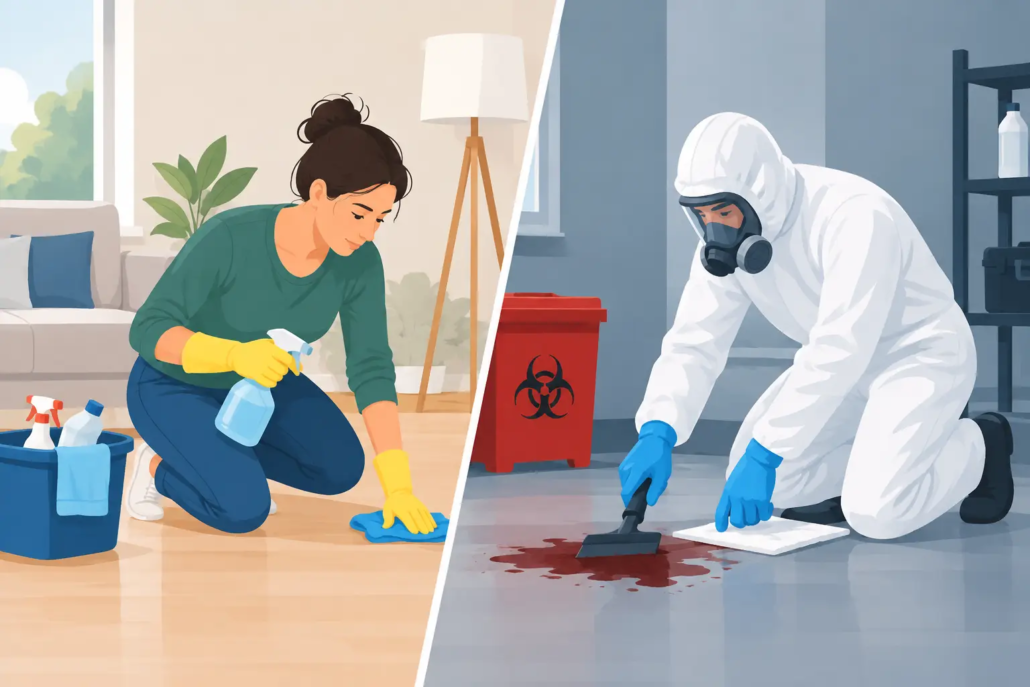
The most significant difference is process. DIY cleanup generally focuses on what can be seen and removed right away. Professional trauma cleanup begins with a controlled assessment of affected areas, materials, and potential pathways of contamination. The work is performed with appropriate protective equipment, containment practices, specialized cleaning agents, and disposal procedures.
A trained crew does not treat every surface the same way. Nonporous materials may be cleaned and disinfected when they can be safely restored. Absorbent materials such as carpet, padding, upholstered furniture, insulation, unfinished wood, or damaged drywall may need removal if contamination has penetrated them. The goal is to return the property to a sanitary condition, not to cover an odor or make the room look acceptable for the moment.
Professional service also brings a clearer chain of responsibility. Instead of coordinating cleaners, junk removal, repairs, odor treatment, and contractors separately, property owners can work with one team that manages the project. That matters when a scene requires cleanup first, then removal of damaged materials, repairs, and reconstruction before the property can be occupied or listed for sale.
Risks that DIY cleanup can create
Not every difficult cleanup requires trauma remediation. A small, ordinary household spill is different from a scene involving blood, decomposition, unattended death, suicide, violent crime, or substantial bodily-fluid contamination. The risk rises when the source, duration, and extent of contamination are uncertain.
DIY attempts can create several problems at once:
- Exposure can occur through the eyes, nose, mouth, broken skin, or contaminated clothing and tools.
- Improper removal can spread material from one room, vehicle area, or surface to another.
- Fluids can remain beneath flooring or inside porous materials, leading to persistent odors and sanitation concerns.
- Incorrect handling and disposal of contaminated items may create compliance and liability issues for property owners or businesses.
- Cleaning without proper containment can expose residents, tenants, staff members, visitors, or pets.
These risks are especially serious in rental housing, commercial buildings, medical settings, hotels, multifamily properties, and workplaces. A property manager or business owner has to consider not only the immediate scene, but also who could enter the space afterward and whether the work has been completed to a safe, defensible standard.
When to call a professional trauma cleanup team
Call for professional help when there is blood or bodily fluid beyond a minor first-aid incident, any decomposition, an unattended death, a suicide or violent crime scene, or an odor that suggests contamination may be inside building materials. The same applies when the affected area includes carpet, furniture, mattresses, drywall, wood flooring, a vehicle interior, or an HVAC-related area.
Time matters, but speed should not mean careless work. If emergency personnel or law enforcement are involved, do not enter or clean the scene until the area has been released. Once it is released, keep people and pets out when possible. Avoid touching affected belongings, running fans that may move odors or particles, or attempting to wash contaminated materials in a household machine.
For landlords, estate representatives, and facility managers, it can help to document the condition from a safe distance for insurance or property records before cleanup begins. A professional team can then assess the damage, identify what can be restored, and explain what must be removed. Clear communication is particularly valuable when multiple decision-makers are involved.
What professional cleanup should include
A credible trauma cleanup provider should be prepared to explain its process plainly. You deserve to know what will happen in the property, what materials may need to be removed, and what restoration work could follow.
The process usually starts with an inspection and a scope of work. The team identifies visible and hidden impact areas, establishes containment where necessary, and removes affected materials that cannot be safely cleaned. After detailed cleaning and disinfection, odor concerns are addressed at their source rather than masked with fragrance. The property is then evaluated for repairs, from replacing flooring or drywall to completing larger reconstruction work.
Discretion matters just as much as technical capability. Trauma cleanup should be handled with unmarked or low-profile service options when available, respectful communication, and careful treatment of personal property. No one should feel pressured to make major decisions without understanding the condition of the space and the available options.
Cost, insurance, and the value of doing it right
The urge to save money is real, particularly after a sudden loss or unexpected incident. Yet the lowest immediate cost is not always the lowest overall cost. If contamination is missed, a property may later need additional demolition, odor remediation, replacement of materials, or delayed repairs. In commercial and rental settings, incomplete cleanup can also interrupt occupancy and operations.
Coverage varies by policy and circumstance, so it is wise to review your insurance policy and speak with your carrier or adjuster when applicable. A detailed professional estimate and documented scope can make those conversations easier. It also helps owners understand where cleanup ends and repairs or reconstruction begin.
Renew Cleaning & Restoration provides one accountable team for sensitive cleanup, removal, restoration, repairs, and reconstruction across Texas. That end-to-end approach can reduce the burden of calling separate vendors while a property owner is trying to make decisions under stress.
A safer next step after a traumatic event
No family, tenant, employee, or property owner should have to prove strength by cleaning a traumatic scene alone. If you are unsure whether an area is safe to enter or whether contamination has reached below the surface, treat the situation seriously and ask for a professional assessment.
The most helpful next step is often the simplest one: protect the space, protect the people around it, and let trained professionals carry the part no one should have to carry alone.