How to Clean Up After Vandalism on Your Property
A broken window, spray-painted wall, forced door, or damaged restroom can make a property feel unsafe fast. Knowing how to clean up after vandalism protects the people who use the space, preserves evidence for a claim, and prevents a manageable incident from becoming water damage, pest access, or a larger security problem.
The first priority is not making the property look perfect. It is making it safe, documented, secure, and ready for the right level of restoration. A small paint tag may be a straightforward cleaning job. Extensive damage, bodily fluids, fire extinguisher discharge, broken glass, or compromised entry points require a more controlled response.
Start by securing the area
Before anyone begins cleaning, check for immediate hazards. Broken glass, exposed wiring, damaged locks, sharp metal, chemical residue, and unstable materials can turn a cleanup into an injury. Keep residents, employees, customers, and pets away from the affected area until it is safe to enter.
If someone may still be inside, there is an active threat, or criminal activity is in progress, call 911. If the incident has ended but property was damaged, contact local law enforcement and follow their direction. Do not touch, move, or clean possible evidence until officers say the area can be released.
For businesses, this may mean closing off one restroom, storefront entrance, office suite, or section of a parking area while keeping the rest of the operation open. For homeowners and landlords, temporary board-up, lock replacement, or a secured opening may be necessary the same day. The goal is simple: stop unauthorized access and prevent weather from causing additional damage.
Document damage before you clean up after vandalism
Photos and video are often the difference between a clear insurance claim and a difficult conversation later. Capture wide shots that show the overall location, then take close-ups of every damaged surface, broken fixture, stolen item area, and point of entry.
Record the date and time you discovered the damage, along with anything you noticed, such as standing water from a broken pipe, a damaged security camera, or a lingering chemical odor. Save surveillance footage promptly. Many systems automatically overwrite recordings after a short period.
Make a written inventory of affected property. Include brand names, model numbers, approximate age, and replacement cost when available. Keep receipts for emergency board-up, temporary security, cleaning supplies, repairs, and hotel or business interruption expenses if they apply. Your insurer or property manager may ask for these records.
It is usually wise to report the damage to your insurer before authorizing major repairs. Emergency work to prevent further loss is often appropriate, but avoid discarding damaged materials until they have been documented and the carrier has provided guidance.
Match the cleanup method to the damage
Vandalism is not one type of cleanup. The safest method depends on the material damaged, what was used to cause the damage, and whether the property has been exposed to water, contaminants, or unauthorized entry.
Graffiti and paint damage
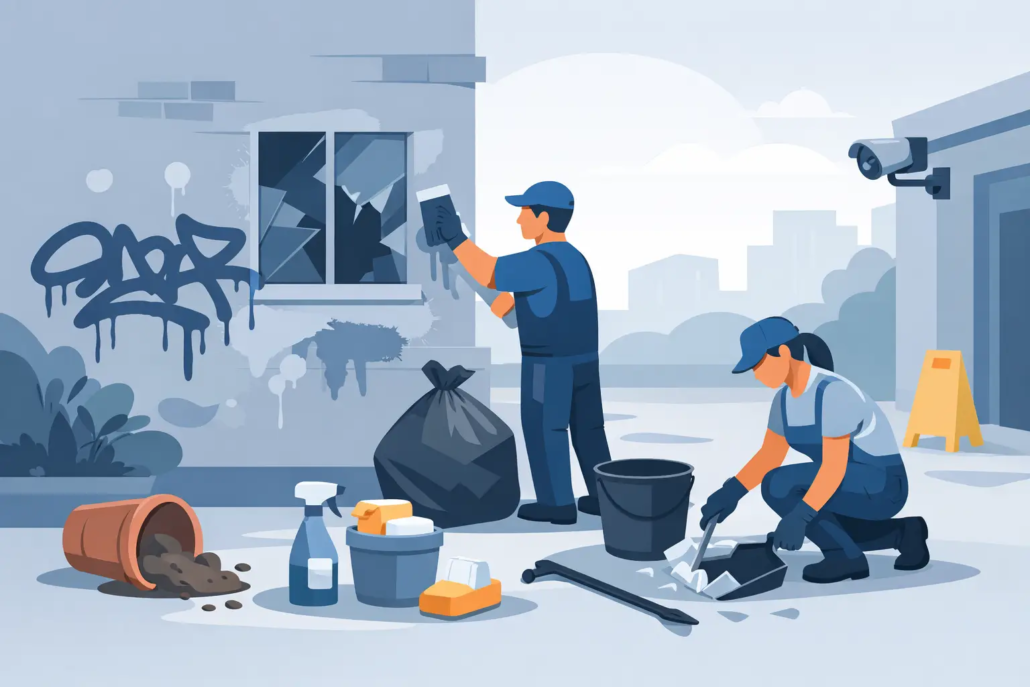
Graffiti removal is most successful when addressed quickly. Fresh paint is generally easier to remove than paint that has cured in direct Texas heat. Still, the wrong solvent can spread the stain, dull a finished surface, remove protective coatings, or permanently discolor siding, brick, stone, glass, vinyl, and painted walls.
Test any cleaner in a small, inconspicuous area first. Porous surfaces such as unsealed brick, concrete, stucco, and natural stone may need specialized products, low-pressure cleaning, poultice treatments, repainting, or protective coating after removal. High-pressure washing can be useful in the right hands, but too much pressure can damage mortar, drive pigment deeper into porous material, and force water behind exterior finishes.
Broken glass and damaged fixtures
Wear cut-resistant gloves, closed-toe shoes, and eye protection before handling broken glass. Pick up large pieces carefully, then use a vacuum for smaller fragments from cracks, carpet edges, and nearby furniture. Do not use a regular household vacuum if there is a large amount of shattered safety glass or if the area may contain hazardous debris.
Damaged lighting, plumbing fixtures, appliances, or wiring should be evaluated before being used again. A vandalized bathroom or kitchen may involve more than visible damage. Water can leak behind walls or beneath flooring, while a broken outlet or light fixture can create an electrical hazard.
Fire extinguisher discharge and chemical residue
A discharged fire extinguisher can leave corrosive powder throughout a room. It may settle inside electronics, HVAC components, cabinets, and textiles, even when the visible mess seems limited. Dry chemical residue should be removed promptly and with appropriate equipment so it is not spread through the property.
If vandals used unknown chemicals, pepper spray, smoke devices, or other substances, avoid guessing at a cleanup method. Ventilate the area only when it is safe to do so, isolate the affected space, and bring in trained professionals who can identify the cleanup needs and protect occupants from exposure.
Biohazards and unsanitary conditions
Vandalism sometimes includes urine, feces, blood, animal remains, drug paraphernalia, or other biological contamination. These situations should not be treated as standard janitorial work. Bodily fluids and sharps can expose untrained people to serious health risks, while porous materials may need removal rather than surface cleaning.
Professional biohazard remediation involves containment, removal of affected materials when needed, disinfection with appropriate products, odor control, and proper disposal. It also restores dignity to a difficult situation by keeping the response discreet and thorough.
Avoid the mistakes that make damage worse
The urge to clean immediately is understandable, especially when customers, tenants, neighbors, or family members can see the damage. But rushing with the wrong tools can increase restoration costs.
Do not paint over graffiti before documenting it. Do not mix cleaning chemicals, particularly bleach with ammonia-based products or acids. Do not sweep potentially contaminated debris with a dry broom, which can spread particles into the air. And do not assume an unlocked or forced entry property is safe simply because the visible damage is limited.
It also helps to think beyond the damaged surface. A smashed window can introduce rain and humidity. A broken sprinkler head can soak drywall. A damaged exterior camera can leave a property vulnerable overnight. Cleanup and restoration should address the full chain of damage, not just the most noticeable mark.
When a professional response saves time
A property owner can often handle a small, isolated paint mark or a minor nonhazardous mess. Professional help becomes more practical when vandalism affects multiple rooms, public-facing areas, large exterior surfaces, sensitive materials, security systems, or any area with potential contamination.
For commercial properties, response time matters because appearance and access affect operations. A retail storefront, apartment community, school, medical office, restaurant, or office building may need after-hours cleaning, temporary protection, odor removal, repair coordination, and a fast return to normal use. Coordinating separate cleaners, glass installers, painters, remediation teams, and contractors can slow that process down.
Renew Cleaning & Restoration can manage the work from inspection and debris removal through cleaning, mitigation, repairs, and reconstruction. That single-provider approach is especially useful when vandalism has caused overlapping problems, such as graffiti, broken entry glass, water intrusion, damaged drywall, and odor concerns. For urgent property damage across Texas, a 24/7 response can help secure the site and keep the recovery moving.
Restore security along with the space
Once cleaning and repairs are underway, consider what will reduce the chance of another incident. Better lighting, repaired fencing, trimmed landscaping near entrances, working cameras, updated locks, and prompt graffiti removal all communicate that the property is monitored and maintained.
The right measures depend on the property. A homeowner may need stronger exterior lighting and a repaired gate. A property manager may need access control changes and camera coverage. A business with repeated incidents may benefit from reviewing closing procedures, waste storage, exterior blind spots, and overnight security expectations.
Vandalism is disruptive because it creates both visible damage and uncertainty. A calm, documented response gives you back control. Secure the property, protect the evidence, use cleanup methods that fit the damage, and bring in qualified help when the situation calls for more than a bucket and paint roller.