I Inherited a Hoarded House, What Now? Start Here
The first time you open the door, the job can feel larger than the house itself. If you are thinking, “I inherited a hoarded house, what now?” do not start by renting a dumpster, hauling boxes, or inviting relatives over to help. First, protect yourself, the estate, and the property from decisions that create more risk.
An inherited hoarded home may contain decades of possessions, but it can also hide mold, rodent activity, structural damage, spoiled food, medication, important documents, sharps, chemicals, or biohazards. The work is emotionally difficult even when conditions are relatively safe. A measured plan gives you room to handle both the practical work and the personal weight of the situation.
I Inherited a Hoarded House, What Now? Secure It First
Before sorting a single item, make the property safe and preserve its condition. Change or rekey exterior locks if appropriate, secure windows and outbuildings, and make sure no one enters without your knowledge. If the home has been vacant, check for active water leaks, damaged roofing, standing water, pests, electrical problems, or signs of trespassing.
Take dated photos and videos from the entryway and each accessible room before anything is moved. This creates a record for probate, insurance, family discussions, or future real estate decisions. Avoid forcing open blocked doors or walking across piles that may be unstable. Floors weakened by moisture, stairs buried under belongings, and overloaded rooms can cause serious injuries.
If there is an active leak, sewage backup, fire damage, strong gas odor, exposed wiring, or a suspected crime or trauma scene, treat it as an emergency. Leave the area and contact the proper emergency service or a qualified restoration provider. These conditions are not cleanout projects.
Confirm Your Authority and Protect Estate Assets
Being named in a will does not always mean you have immediate authority to sell, remove, donate, or dispose of belongings. Probate requirements vary, and family conflict often starts when well-meaning people begin clearing items before the estate representative has documented them.
Talk with the estate attorney, executor, or probate court contact before disposing of property. Ask what must be inventoried, whether valuables need an appraisal, and how personal effects should be handled. If the person left debts, there may be additional rules around estate assets.
Keep a simple written log of major actions and expenses. Save photos, invoices, donation receipts, and records of anything sold. This is useful when you need to account for estate funds, explain decisions to family members, or establish the home’s condition before repairs.
Look for essential documents without attempting a full sort
Important documents are often mixed into ordinary household materials. Search only safe, accessible areas first, such as desks, filing cabinets, safes, mail trays, and clearly labeled boxes. Watch for wills, life insurance paperwork, deeds, vehicle titles, bank records, tax returns, military records, identification, and keys.
Do not assume loose papers are worthless. A trained cleanup team can set aside documents, photos, heirlooms, and clearly identifiable valuables during the cleanout process. Agree in advance on how those items will be labeled, stored, and delivered to the estate representative.
Understand What Makes Hoarding Cleanup Different
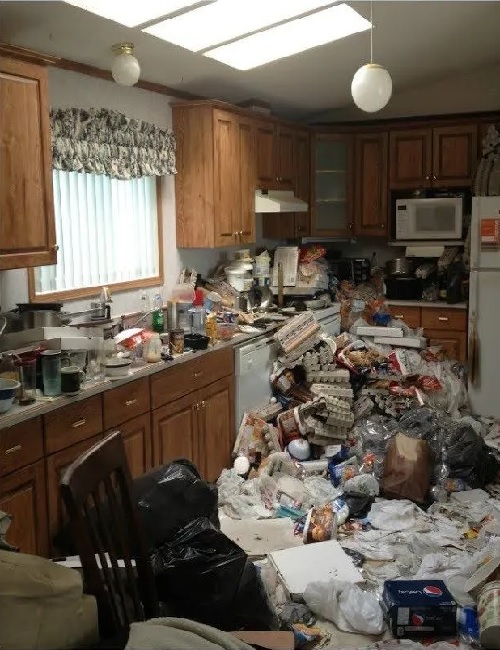
A hoarded house is not simply a cluttered house. Materials may be packed from floor to ceiling, exits may be blocked, appliances may be inaccessible, and rooms may no longer serve their intended purpose. The visible belongings are only part of the issue.
Common hidden concerns include pest droppings, animal waste, urine contamination, spoiled perishables, mold growth, airborne dust, insects, expired medications, and damaged plumbing or electrical systems. In severe cases, decomposition odors or biohazards require specialized handling. Disturbing contaminated materials without proper protective equipment can spread contaminants through the home or expose helpers to illness and injury.
There is also a practical trade-off. Sorting every item one by one may feel respectful, but it can add weeks or months of cost, prolong property damage, and make a sale or renovation impossible. On the other hand, fast disposal without a preservation plan can lead to lost heirlooms, missing documents, and lasting regret. The right approach depends on the estate timeline, the home’s condition, and the family’s priorities.
Create a Clear Scope Before Cleanup Begins
A professional inspection should identify the amount of material, safety hazards, contamination concerns, and any restoration work needed after removal. It should also clarify what happens to belongings: what will be retained, documented, donated where appropriate, recycled, or disposed of according to local requirements.
Ask for an estimate that separates the major phases of work. A complete project may involve contents removal, sanitation, odor treatment, pest-related cleanup, mold remediation, water-damage mitigation, demolition, repairs, and reconstruction. A low cleanout price can become expensive if it does not address the odor, damaged subfloor, contaminated drywall, or moisture problem underneath.
For Texas families, Renew Cleaning & Restoration can manage the process from inspection and cleanup through remediation, repair, and reconstruction, so you are not left coordinating separate crews after the contents are gone. This is especially helpful when the house needs to be made safe quickly for probate, sale, rental, or occupancy.
Decide What the Property Needs to Become
Do not make every decision at once. After the home is cleared and assessed, you can decide whether the goal is a sale, a rental, a family move-in, or a full renovation. Each option calls for a different level of work.
A home being sold as-is may need hazard removal, deep cleaning, odor control, and enough repair to allow safe access and accurate marketing. A rental will typically need more extensive repairs, durable finishes, code-conscious updates, and reliable systems. If a family member plans to live there, the project may warrant a broader rebuild that addresses the home’s long-term condition rather than only its immediate appearance.
Be realistic about odors. Air fresheners and surface cleaning rarely solve odors caused by animal waste, smoke residue, mold, spoiled materials, or contamination in flooring and walls. Lasting odor removal may require removing affected materials, cleaning structural surfaces, treating the air, and correcting the source of moisture or contamination.
Give Family Members a Fair, Firm Process
Inherited homes can bring out strong emotions. One person may see trash; another may see a parent’s history. Set a short, defined window for immediate family members to identify items they would like reviewed. Communicate in writing, document what is removed, and avoid allowing unsupervised visits in unsafe areas.
It helps to separate sentimental decisions from cleanup decisions. Photos, letters, jewelry, military items, family records, and a limited number of meaningful objects deserve careful attention. Broken, contaminated, or unsanitary materials may not be safe to keep, even when they are emotionally difficult to release.
If family members disagree, pause before disposing of disputed items and seek direction from the executor or attorney. A clear process is kinder than trying to satisfy everyone in the moment.
When to Call for Professional Help Immediately
Professional hoarding cleanup is the safest choice when pathways are blocked, debris is stacked high, there are pests or animal waste, the home smells strongly of urine or decay, or you cannot assess the condition of the floors and utilities. It is also appropriate when the home contains needles, medications, bodily fluids, chemical containers, mold, fire damage, or evidence of water intrusion.
The goal is not to judge the person who lived there. It is to handle a difficult property with discretion, protect the people involved, and return the home to a usable condition. A trained team can wear appropriate protective equipment, remove materials safely, sanitize affected areas, document the process, and identify repairs before minor damage grows into a larger restoration project.
You do not have to solve an inherited hoarded house in one exhausting weekend. Secure the property, establish your authority, preserve what matters, and bring in qualified help for the hazards you should not carry alone. One careful next step is enough to start moving the home – and the estate – toward a clean, workable future.