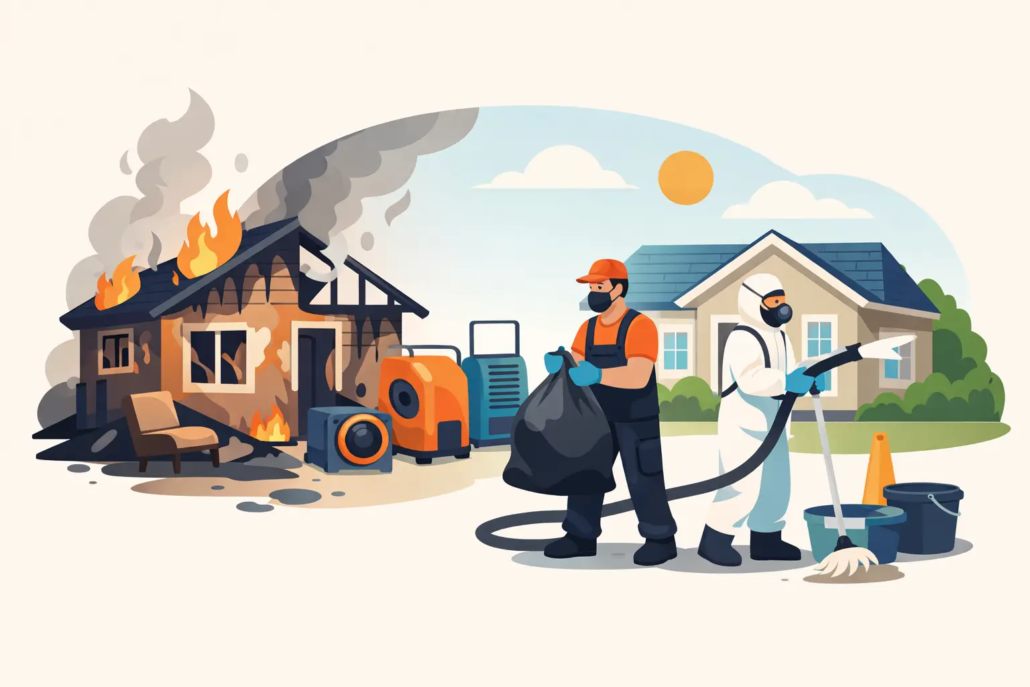
Fire Cleanup: What Happens After the Flames
A fire can be out in minutes, but the damage it leaves behind is rarely simple. Smoke travels through rooms that never burned. Soot settles inside cabinets, HVAC systems, and wall cavities. Water used to extinguish the fire can create a second emergency if it is not removed quickly.
Fire cleanup is the work of making a property safe, clean, and usable again after a fire. That may mean removing damaged contents, cleaning smoke residue, drying water-affected materials, controlling odors, repairing structural damage, and rebuilding parts of the property. The right next step depends on the size of the loss, the materials involved, and whether the building is safe to enter.
Start With Safety, Not Cleanup
Do not re-enter a fire-damaged home or business until the fire department or another qualified authority has said it is safe. A property may have weakened floors, damaged electrical systems, falling debris, sharp materials, contaminated water, or hidden hot spots. What looks like a minor kitchen fire can also leave harmful residue well beyond the burn area.
Once entry is allowed, avoid turning on lights, appliances, or HVAC equipment until they have been inspected. Do not walk through standing water near electrical outlets or panels. If the roof, ceiling, walls, or stairs show visible damage, stay out of those areas.
Before moving belongings, take clear photos and video of the affected rooms, contents, and visible damage. This documentation can help support an insurance claim and give restoration professionals a better picture of the loss. If possible, keep damaged materials in place until they have been reviewed, unless they create an immediate safety concern.
Why Fire Damage Spreads Far Beyond the Burned Room
The flames are often only one part of the loss. Heat can crack glass, warp metal, damage wiring, and compromise drywall or framing. Smoke moves through open doors, ducts, gaps around plumbing, and connected rooms. It can leave residue on clothing, upholstery, electronics, dishes, books, and other personal property.
Soot is especially difficult because it is not one uniform material. A slow, smoldering fire may create greasy, sticky residue. A fast-burning fire can produce dry soot that spreads easily when disturbed. Fires involving plastics, insulation, synthetic fabrics, or cooking oils can leave residues that require different cleaning methods.
That is why ordinary household cleaning is often not enough. Wiping a soot-covered wall with the wrong product can smear residue deeper into the surface. Vacuuming without the right filtration can send fine particles back into the air. Spraying air freshener over smoke odor may mask the smell for a few hours without addressing the particles causing it.
What Professional Fire Cleanup Usually Includes
A complete fire restoration project begins with an inspection. The restoration team identifies affected materials, checks for water damage, evaluates smoke migration, documents conditions, and develops a scope for cleanup and repairs. For larger losses, the property may need temporary board-up, roof tarping, or other measures to secure it from weather and unauthorized entry.
The cleanup process typically includes several connected stages.
Water Removal and Drying
If firefighting efforts left water inside the property, extraction and drying should begin quickly. Wet carpet, insulation, drywall, wood flooring, and contents can deteriorate rapidly. Moisture also creates conditions that may lead to microbial growth.
Commercial drying equipment, moisture monitoring, and controlled demolition may be needed to remove trapped water from wall cavities, floors, and other concealed areas. Drying is not simply about making a surface feel dry. Materials must be evaluated for moisture below the surface as well.
Soot and Smoke Residue Removal
Technicians select cleaning methods based on the type of residue and the material being cleaned. This may involve HEPA vacuuming, dry sponge cleaning, wet cleaning, abrasive cleaning, specialized detergents, or detailed cleaning of contents and building surfaces.
Porous materials can be more challenging than hard surfaces. Unsealed wood, fabric, insulation, acoustic ceiling tiles, and some types of drywall may absorb smoke deeply enough that cleaning alone is not effective. In those cases, removal and replacement may be the safer long-term choice.
Odor Control
Smoke odor is not just an inconvenience. It is a sign that odor-causing particles or compounds remain in the property. Effective odor removal requires finding where the smoke traveled, cleaning those affected areas, and treating the air and materials as needed.
Depending on the loss, odor control may include HEPA air filtration, thermal fogging, hydroxyl treatment, ozone treatment in unoccupied spaces, sealing of cleaned structural surfaces, and HVAC cleaning. The best method depends on the building, the materials involved, and whether occupants have sensitivities or health concerns. No single odor treatment is right for every fire.
Contents Cleaning and Disposal
Some belongings can be cleaned, restored, and returned. Others may be too heavily damaged by heat, soot, water, or odor. A careful contents process separates items that can be salvaged from those that need disposal, while documenting the condition of affected property.
This is often the most personal part of a fire loss. Family photos, heirlooms, business records, furniture, clothing, and inventory may all require different handling. A compassionate restoration team should explain what can realistically be restored rather than making promises before the items have been evaluated.
When Repairs Become Reconstruction
Cleanup prepares the property for recovery, but it does not always return it to pre-fire condition by itself. Burned framing, damaged drywall, destroyed flooring, compromised roofing, electrical damage, and plumbing repairs can require a full reconstruction phase.
This is where using multiple vendors can become frustrating. One company may handle mitigation, another may perform demolition, and a third may complete repairs. The property owner is left coordinating schedules, answering the same questions repeatedly, and trying to determine who is responsible when work overlaps.
An end-to-end provider can manage the project from inspection through cleanup, removal, mitigation, repairs, and reconstruction. That single point of accountability helps keep the transition from emergency work to rebuilding more organized. It also gives the owner, property manager, or adjuster a clearer view of what has been completed and what remains.
Common Fire Cleanup Mistakes to Avoid
The first days after a fire are stressful, and it is understandable to want to start cleaning immediately. However, a few well-intended actions can make damage worse or create safety problems.
Avoid washing soot-covered walls, ceilings, or upholstery with household cleaners before they have been assessed. Do not use a standard vacuum on soot, and do not run the HVAC system if smoke may have entered the ductwork. Avoid eating food, using medications, or relying on cosmetics that were exposed to heat, smoke, or firefighting chemicals.
It is also wise to avoid throwing everything away too quickly. Damaged items may need to be documented for insurance purposes, and some possessions that look unsalvageable can sometimes be restored. On the other hand, holding onto heavily contaminated porous materials can prolong odor and create more work later. A professional evaluation helps make those decisions based on the actual condition of each item.
Fire Cleanup for Homes, Businesses, and Managed Properties
A house fire can displace a family and interrupt daily life. A commercial fire can stop operations, affect employees, damage inventory, and create obligations to tenants, customers, or patients. For landlords and property managers, even a contained unit fire may spread smoke through shared hallways, neighboring units, or ventilation systems.
The priorities may differ, but the need for a fast, organized response is the same. Homes need a safe path back to occupancy. Businesses often need to protect records, equipment, and revenue-producing operations. Managed properties need clear documentation and coordinated work across multiple stakeholders.
Renew Cleaning & Restoration provides 24/7 emergency response for Texas property owners and organizations that need one team to take ownership of fire cleanup, restoration, repairs, and reconstruction. A prompt assessment can help limit secondary damage and give everyone involved a practical plan forward.
After a fire, the goal is not to rush past the loss. It is to handle each stage correctly, protect what can be saved, and restore the property with care. The sooner the right cleanup and restoration work begins, the sooner a damaged space can start to feel usable, secure, and familiar again.